About the Author: Knight is an aviation professional with extensive experience in airport operations and aviation career development. He specializes in helping aspiring aviation professionals understand career paths, salary expectations, and advancement opportunities. His expertise comes from working directly with aviation employers and industry professionals. Kinght’s mission is to make complex aviation career information accessible to everyone interested in the aviation industry.
Introduction
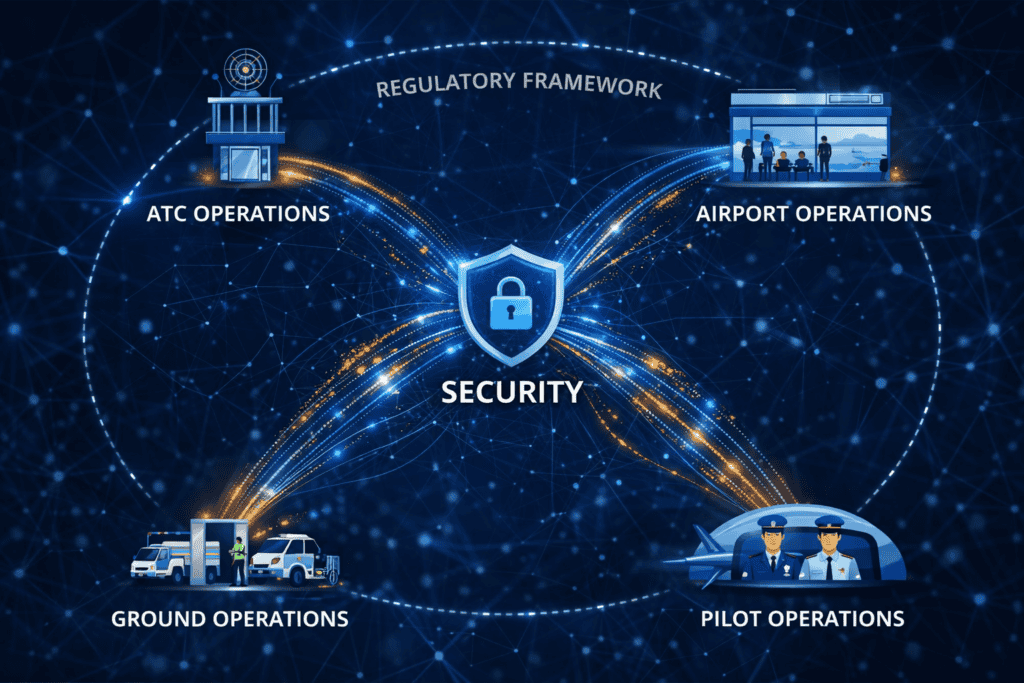
Aviation operates as a complex ecosystem where security, operations, regulations, and careers are deeply interconnected. Each function supports and depends on the others. Security procedures protect operations but require operational infrastructure and trained personnel. Regulations establish requirements that drive operations and security procedures. Career paths develop professionals who manage each function. Understanding how these four elements work together provides comprehensive insight into modern aviation.
The global aviation industry is one of the most complex and tightly coordinated systems in the world. Every safe flight you see taking off or landing is the result of multiple aviation domains working together behind the scenes. Aviation security, airport operations, aviation regulations, and aviation careers are not separate topics—they are deeply interconnected parts of a single ecosystem.
Understanding how these elements work together is essential for students, aviation enthusiasts, and anyone considering a career in aviation. This guide explains how aviation security, safety, airport operations, global regulations, and career roles combine to ensure safe, efficient, and reliable air travel worldwide.

Aviation security and airport operations are two interconnected pillars that ensure the safety, efficiency, and reliability of global air travel.
How Security and Operations Interconnect
Security requirements directly shape airport operations. Security checkpoints require terminal space, staffing, and operational procedures. Baggage screening requires facilities, staff, and time. These requirements affect passenger flow, terminal design, staffing levels, and airport capacity. Efficient security operations enable smooth passenger flow. Conversely, security breaches disrupt operations—when security threats are identified, operations pause while threats are investigated.
For detailed information on security systems, see our article on aviation security fundamentals.
How Regulations Drive Everything
Federal aviation regulations establish requirements for every aspect of airport operations. FAA regulations specify security procedures, maintenance requirements, operational standards, and safety protocols. NTSB recommendations from accident investigations lead to regulatory changes that affect how airports operate. International aviation organizations establish standards that countries must implement.
Regulations drive the need for trained professionals—airports need security managers, operations managers, maintenance supervisors, and safety officers to ensure regulatory compliance. For more on regulations, see our guide on aviation regulations.
How Careers Develop from Operational Needs
Every position in aviation exists because operations require skilled personnel. Security supervisors manage security operations. Duty managers oversee daily operations. Maintenance managers ensure aircraft safety. Air traffic controllers manage flight safety. Career opportunities exist because these functions are critical and require trained professionals.
For more on aviation careers, see our comprehensive guide on aviation careers.
The Aviation Ecosystem: An Overview
Aviation operates as a system of systems. No single department can function independently. For example:
- Aviation security protects passengers, aircraft, and airports from threats
- Airport operations ensure smooth daily functioning of terminals and airside areas
- Aviation regulations define global standards and legal frameworks
- Aviation careers supply trained professionals to manage every process
When one part weakens, the entire system is affected. This interdependence is why aviation is considered a high-responsibility and highly regulated industry.
Aviation Security: The Foundation of Safe Air Travel
Aviation security is the first visible layer of protection in the aviation system. It focuses on preventing unlawful interference such as terrorism, sabotage, and unauthorized access to aircraft or restricted areas.
Key components of aviation security include:
- Passenger and baggage screening
- Access control to restricted airport zones
- Aircraft security checks
- Behavioral detection and surveillance
- Cybersecurity protection for aviation systems
Without strong aviation security, airport operations cannot function safely, and regulatory compliance becomes impossible. Aviation security measures are designed according to international standards and enforced through national authorities.
Aviation security also directly influences public trust. Passengers are more willing to fly when they feel protected, making security essential not just for safety, but also for industry sustainability.
Airport Operations: Where Everything Comes Together
Airport operations act as the central coordination hub of aviation. While aviation security focuses on protection, airport operations manage the daily flow of passengers, aircraft, baggage, and ground services.
Airport operations include:
- Terminal management
- Airside and landside coordination
- Aircraft turnaround processes
- Ground handling activities
- Emergency response coordination
Security procedures are embedded into airport operations at every stage. For example, passenger screening, staff access control, and baggage handling are coordinated operationally but governed by security protocols.
Efficient airport operations ensure that security measures do not disrupt passenger flow while maintaining strict safety standards. This balance is critical for avoiding delays and maintaining operational efficiency.
Aviation Regulations: The Global Rulebook
Aviation regulations form the legal backbone of the entire aviation industry. They define how security, operations, and personnel must function to meet international safety and security standards.
Aviation regulations are created and enforced by:
- International organizations
- National civil aviation authorities
- Airport and airline regulatory bodies
These regulations cover:
- Aviation security standards
- Airport operational procedures
- Aircraft certification
- Training and licensing requirements
- Safety management systems
Without regulations, aviation security would lack consistency, and airport operations would vary dangerously from country to country. Regulations ensure global uniformity, allowing aircraft to operate safely across international borders.
Aviation Safety vs Aviation Security: A Critical Distinction
Although closely related, aviation safety and aviation security serve different purposes:
- Aviation safety focuses on preventing accidents caused by technical failures or human error
- Aviation security focuses on preventing intentional harmful acts
Airport operations must integrate both. For example, runway inspections are safety-related, while access control is security-related. Regulations mandate that both systems work together without conflict.
Understanding this distinction is important for anyone pursuing aviation careers, as different roles focus on different aspects of safety and security.
Aviation Careers: The Human Element
Behind every regulation, security checkpoint, and airport operation is a trained aviation professional. Aviation careers form the backbone of the entire system.
Key aviation career categories include:
- Aviation security officers
- Airport operations managers
- Ground handling staff
- Air traffic controllers
- Regulatory and compliance officers
- Safety and quality auditors
Each role depends on the others. For example:
- Security officers rely on operations teams for access control systems
- Operations managers rely on regulatory compliance officers
- Regulators rely on trained professionals to implement standards
Aviation careers require continuous training because regulations and security threats constantly evolve. This makes aviation a dynamic career field with long-term growth potential.
How All Aviation Domains Work Together in Real Life
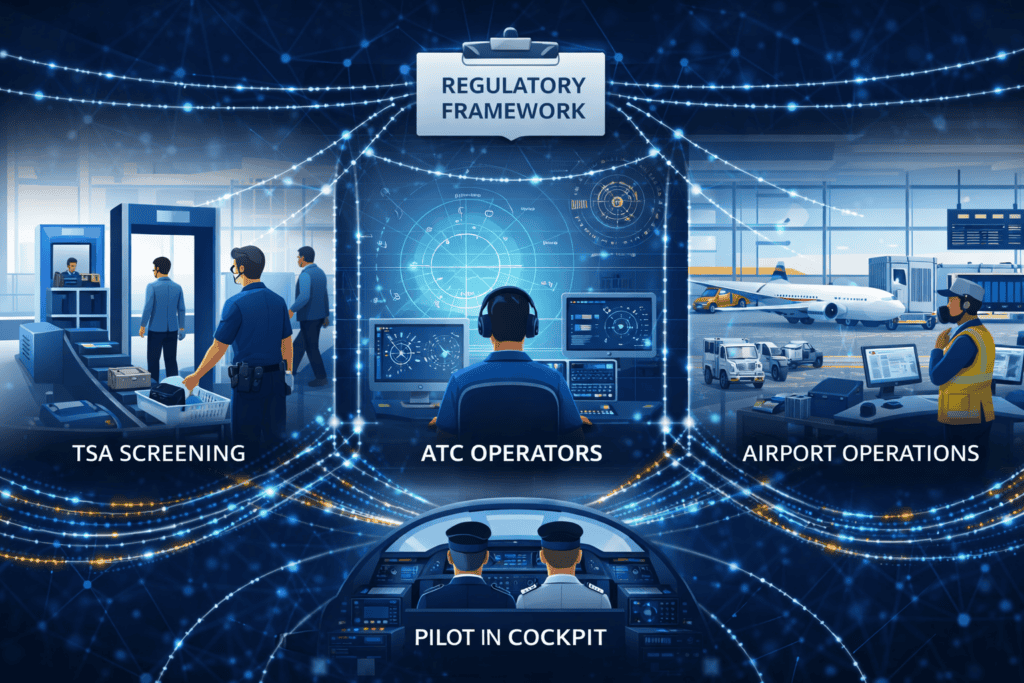
Let’s look at a real-world example of how these systems interact:
Passenger Journey Example
- Regulations define screening procedures
- Airport operations manage passenger flow to checkpoints
- Aviation security screens passengers and baggage
- Operations teams handle boarding and aircraft turnaround
- Aviation professionals ensure compliance and safety
If any step fails, delays, security risks, or safety concerns arise. This is why aviation relies on layered systems and redundancy.
Why This Interconnection Matters for the Future of Aviation
Modern aviation faces new challenges:
- Increased passenger volumes
- Advanced security threats
- Digital transformation
- Sustainability goals
To handle these challenges, aviation security, airport operations, regulations, and careers must evolve together. Technology such as biometric screening, AI-based surveillance, and smart airport systems are already reshaping how aviation functions.
Future aviation professionals will need multidisciplinary knowledge—not just technical skills, but also regulatory awareness and operational understanding.
Building a Career with a System-Level Understanding
For students and job seekers, understanding how aviation systems connect gives a major advantage. Employers value professionals who:
- Understand regulatory frameworks
- Appreciate security responsibilities
- Can coordinate with operations teams
- Think systemically rather than in silos
This holistic knowledge leads to faster career growth and leadership opportunities.
Conclusion
Aviation functions are deeply interconnected—security protects operations, regulations drive procedures, and careers develop professionals to manage these functions. This interconnection creates the safe, efficient aviation system we depend on.
For comprehensive information on each area, see our guides on airport operations, aviation security, air traffic control, and aviation careers.
Sources & References
- FAA Regulations and Standards
- Airport Council International
- International Air Transport Association