About the Author: Knight is an aviation professional with extensive experience in airport operations and aviation career development. He specializes in helping aspiring aviation professionals understand career paths, salary expectations, and advancement opportunities. His expertise comes from working directly with aviation employers and industry professionals. Kinght’s mission is to make complex aviation career information accessible to everyone interested in the aviation industry.
Introduction
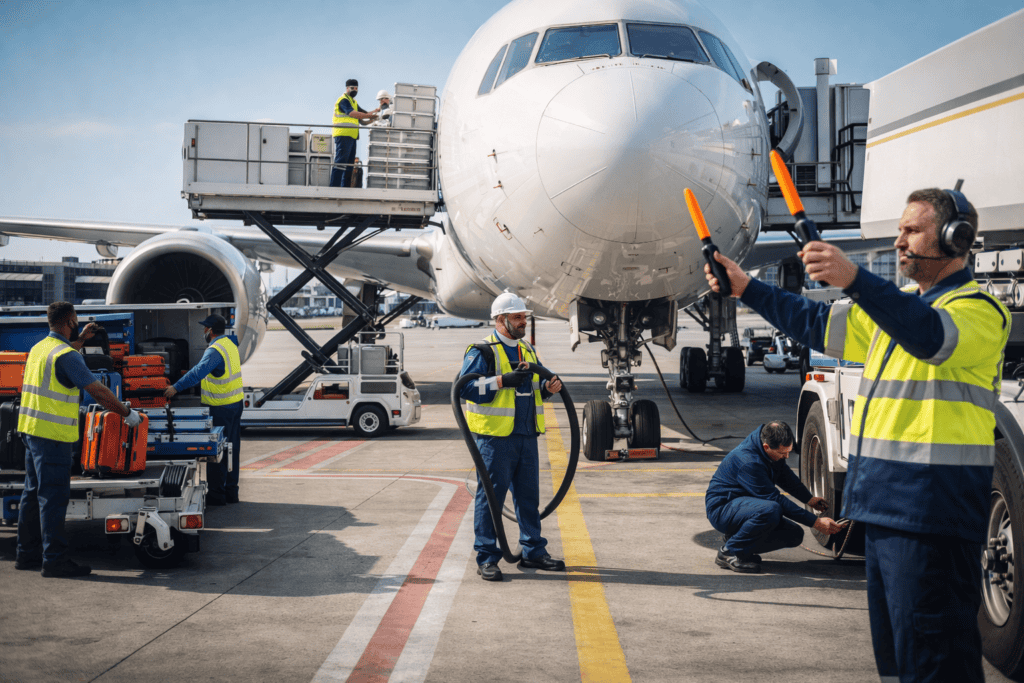
Every aircraft that lands requires coordination by dozens of ground personnel—baggage handlers, fueling specialists, catering crews, ramp agents, and ground supervisors. These ground handling professionals ensure aircraft are properly serviced, loaded, cleaned, and prepared for departure. Without efficient ground handling, aircraft would sit idle at gates, airlines would lose revenue, and flight schedules would collapse. Understanding ground handling jobs provides insight into airport careers, explains what these professionals do, and demonstrates why their work is critical.
Ground handling is often invisible to passengers, yet it’s essential to airline operations. These professionals work in all weather conditions, perform physically demanding work, and maintain tight schedules. This comprehensive guide examines ground handling positions, salary expectations, career paths, and why ground handling is an excellent entry point to aviation careers.
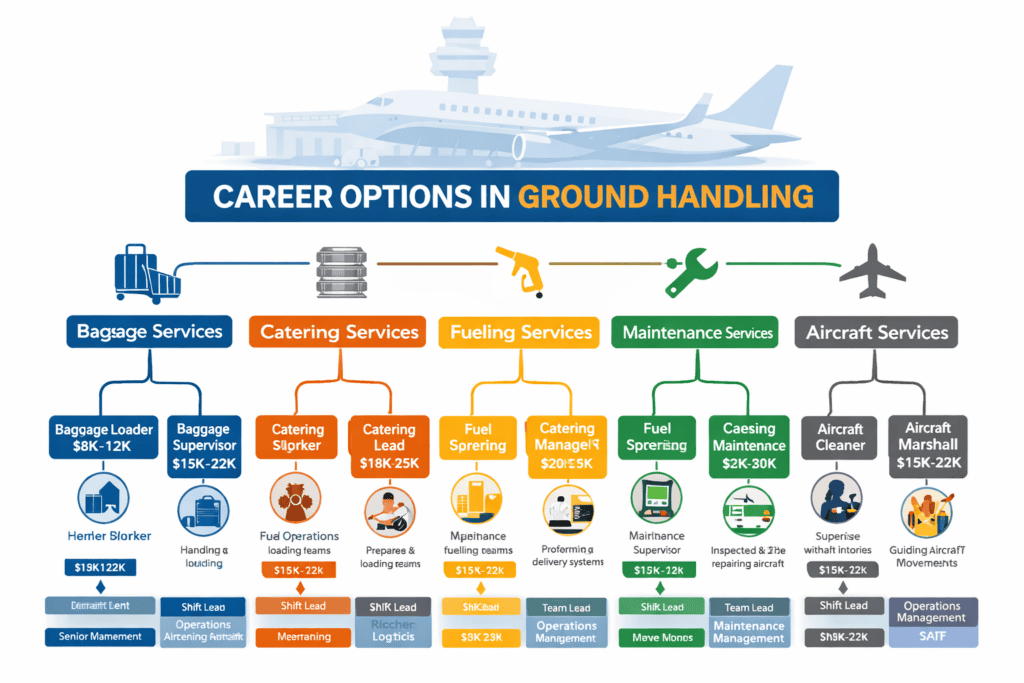
What is Ground Handling?
Ground handling encompasses all services required to prepare aircraft between flights—unloading passengers and baggage, refueling, catering, cargo operations, cleaning, and maintenance. Ground handling companies employ specialized personnel for each function. Airlines either employ in-house ground handling teams or contract with ground handling companies that provide these services.
Ground Handling Job Positions
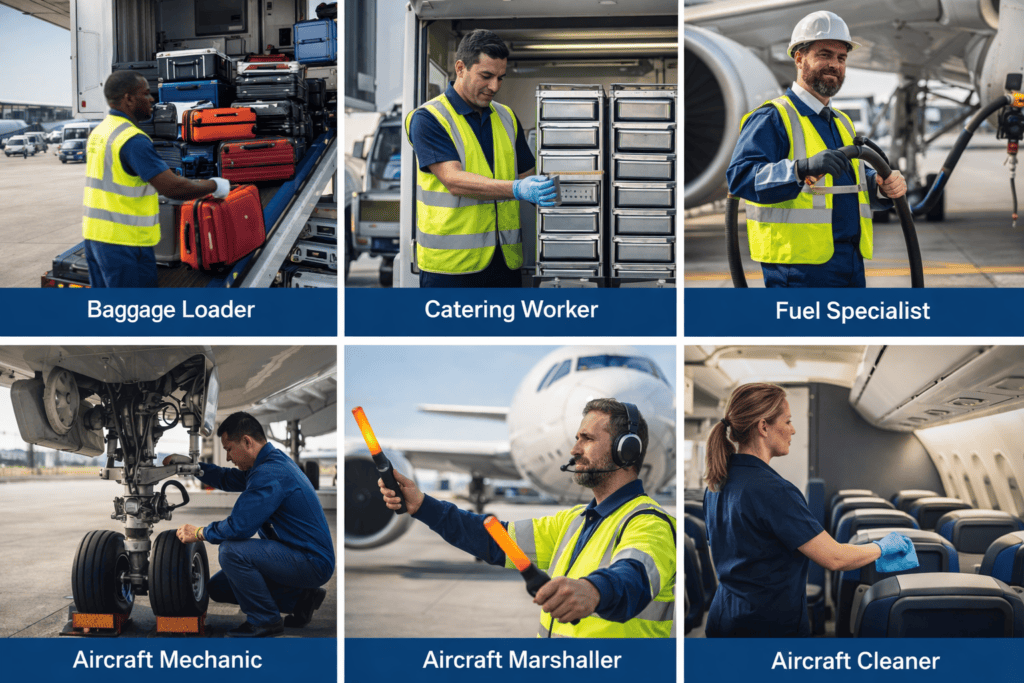
Baggage handlers load and unload passenger baggage, sort baggage, and move it through baggage systems. This is typically an entry-level position requiring physical strength and attention to detail. Baggage handling wages typically start at $18,000-$25,000 annually, advancing to $25,000-$35,000 with experience.
Ramp agents supervise aircraft movement on the ramp, manage equipment positioning, coordinate between airlines and ground crews, and ensure safety during aircraft servicing. These positions typically require 1-2 years of ground handling experience. Ramp agent salaries range from $28,000-$45,000 annually.
Fueling specialists operate aircraft refueling equipment, calculate fuel requirements, manage fuel inventories, and ensure safety during fueling operations. These specialized positions require certification. Wages range from $30,000-$48,000 annually.
Catering crews load meals, beverages, and supplies into aircraft, manage inventory, and maintain food safety standards. Wages typically range from $24,000-$35,000 annually.
Aircraft cleaners clean aircraft interiors, maintain sanitary conditions, restock supplies, and manage waste. These positions are entry-level and wages range from $20,000-$30,000 annually.
Lead handlers and supervisors oversee ground handling crews, coordinate operations, manage schedules, and ensure quality. These positions require 3-5 years of experience. Supervisor wages range from $40,000-$60,000+ annually.
Ground operations managers oversee all ground handling at specific airports, manage contracts, coordinate with airlines, and manage budgets. These senior positions require 8-10+ years of experience. Salaries range from $60,000-$100,000+ annually. For more on airport management careers, see our article on airport operations management.
Career Progression in Ground Handling
Entry-level ground handling positions—baggage handler, aircraft cleaner, catering crew—require only high school diploma and willingness to work in all weather conditions. These positions provide entry to aviation industry for those without specialized training.
Advancement to ramp agent or fueling specialist requires 1-2 years of ground handling experience plus specialized training. Ramp agent training typically takes 4-8 weeks and focuses on aircraft types, ground operations, safety, and equipment. Fueling specialist certification requires FAA-approved training on fuel systems and safety.
Further advancement to supervisor or operations management requires 3-5+ years of progressively responsible roles, demonstrated leadership, and often some college education. Supervisors typically complete aviation management courses or associate degrees. Operations managers might pursue bachelor’s degrees in airport management or business administration.
Each advancement level involves significant salary increases—from entry-level $20,000-$25,000 to supervisor $40,000-$60,000 to operations management $70,000-$100,000+. A motivated individual can reach $100,000+ salaries with 10-15 years of career progression.
Benefits of Ground Handling Careers
Ground handling offers several advantages. No specialized education required to enter—high school diploma and willingness to work provides entry. Clear career progression from entry to management exists with defined advancement steps. Competitive wages for entry-level positions compared to other industries. Benefits typically include health insurance, retirement plans, and sometimes airline travel benefits.
Job security is relatively strong—every flight requires ground handling, and the position can’t be automated. Diverse roles allow career changes—those tiring of baggage handling can move to fueling, catering, or supervisory roles. Growth opportunities in expanding airports mean career advancement possibilities.
Physical and Demanding Aspects
Ground handling work is physically demanding. Baggage handlers lift 40+ pounds repeatedly—each bag on a large flight means dozens of lifts. Ramp agents stand for extended periods in all weather. Fueling specialists work with hazardous materials requiring safety precautions. Work happens around schedule, often involving early mornings, late nights, weekends, and holidays since airports operate 24/7.
Fatigue from irregular schedules can affect job performance. Weather conditions—extreme heat, cold, rain, snow—make work uncomfortable. Despite challenges, many ground handlers find satisfaction in essential work and team camaraderie.
Global Ground Handling Opportunities
Ground handling roles exist worldwide at every commercial airport. International ground handling can offer adventure for those interested in working abroad. However, international positions often require specific experience or language skills. Most career progression happens at home airports, though international assignments are sometimes available.
Technology and Future Ground Handling
Technology is beginning to impact ground handling. Automated baggage systems reduce baggage handler roles in some airports. Electric tugs reduce fueling needs. Robotics might eventually perform some ground functions. However, ground handling’s essential and diverse nature means these roles will remain important for decades.
For information on technological advancement in airports, see our article on airport operations and modernization.
Conclusion
Ground handling positions provide entry-level aviation careers with clear advancement pathways to management positions. Wages are competitive for entry-level positions, benefits are solid, and career progression can lead to $100,000+ management roles. While work is physically demanding and schedules irregular, ground handling offers rewarding aviation careers for those willing to work hard and progress.
If you’re interested in aviation careers without requiring years of education, ground handling offers immediate entry and clear advancement. See our guides on aviation careers overview and airport operations fundamentals for more career information.
Sources & References
- Bureau of Labor Statistics – Ground Transportation Workers
- Airlines Association – Ground Handling Industry Data
- Ground Handling Services Association
Pingback: "Airport Emergency Preparedness: Complete Response Plans & Safety Procedures 2026"