Air traffic control is one of the most important and respected careers in aviation. Every day, air traffic controllers manage thousands of aircraft movements, ensuring safe separation between flights and smooth airspace operations.
If you are interested in aviation but don’t want to become a pilot, becoming an air traffic controller can be an excellent career path.
In this guide, we will explain the qualifications, training process, skills required, salary expectations, and career growth opportunities in air traffic control.
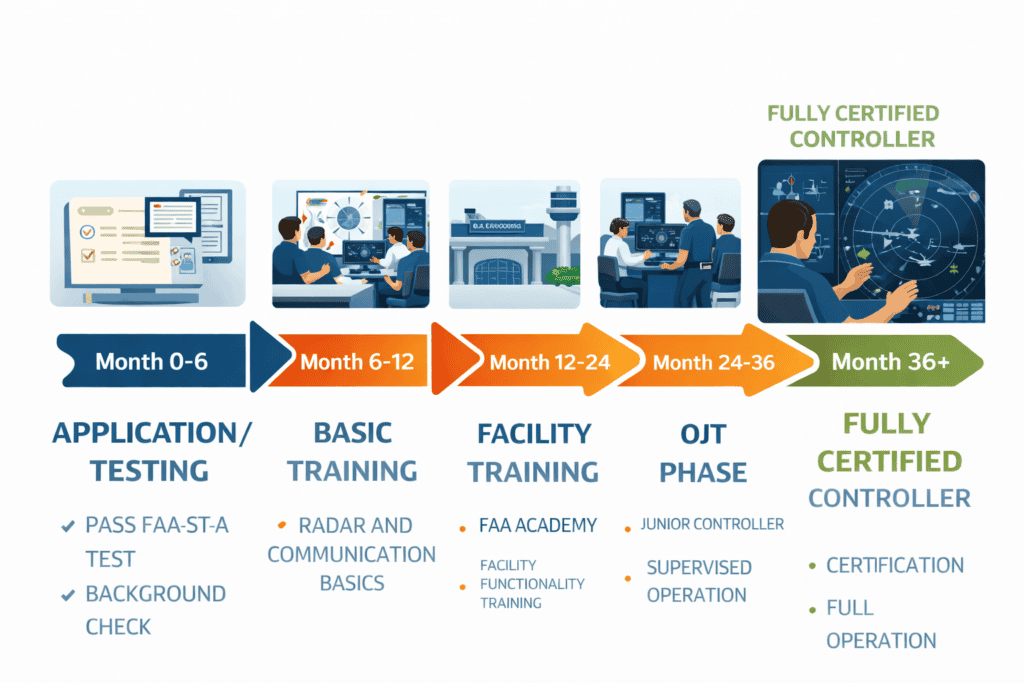
What Does an Air Traffic Controller Do?
Air traffic controllers (ATCs) are responsible for managing aircraft movements on the ground and in the air. Their main objective is to prevent collisions and maintain efficient traffic flow.
They:
- Provide takeoff and landing clearance
- Monitor aircraft positions using radar
- Maintain safe vertical and horizontal separation
- Communicate with pilots using radio systems
- Handle emergency situations
Without ATC, modern aviation would not function safely.
Air Traffic Control Explained post
Types of Air Traffic Controllers
There are three primary types of controllers:
1. Tower Controllers
They manage aircraft on runways and taxiways.
2. Approach Controllers
They handle aircraft entering or leaving airport airspace.
3. Area (En-Route) Controllers
They manage aircraft at cruising altitude between cities.
Each role requires specialized training.
Educational Qualifications Required
Requirements vary by country, but generally:
- High school completion (with math and physics preferred)
- Bachelor’s degree (in some countries)
- Strong English communication skills
Some aviation authorities conduct competitive entrance exams.
Skills Required to Become an ATC
Air traffic control is demanding and requires specific skills:
Strong Decision-Making Ability
Controllers must make quick and accurate decisions.
Excellent Communication
Clear and precise communication with pilots is critical.
High Concentration Levels
Controllers must remain focused for extended periods.
Stress Management
Handling heavy traffic requires mental resilience.
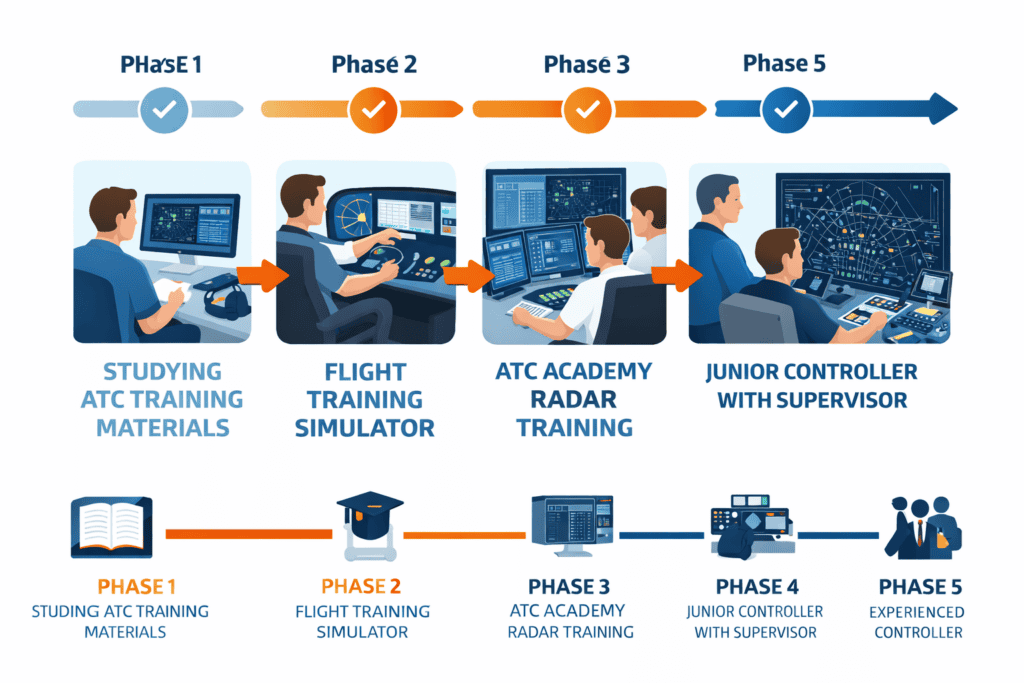
Training Process
Once selected, candidates undergo intensive training at aviation training institutes or civil aviation academies.
Training includes:
- Airspace management theory
- Radar simulation exercises
- Communication phraseology
- Emergency handling procedures
Practical simulator training is a major part of certification.
Training duration may range from 1 to 3 years depending on country.
Licensing and Certification
After training, candidates must pass:
- Written examinations
- Practical simulator tests
- Medical fitness assessments
They receive a controller license from the national aviation authority.
Controllers must undergo regular medical and performance evaluations.
Salary of Air Traffic Controllers
Air traffic control is considered a high-paying aviation career.
Average salary varies by country:
- Entry-level: Moderate salary
- Experienced controllers: High income
- Senior supervisors: Very competitive compensation
Salary depends on:
- Experience
- Location
- Airport traffic volume
- Government pay structure
In many countries, ATC is a government-controlled profession offering job security.
Work Environment
Air traffic controllers work in:
- Airport control towers
- Radar control centers
- En-route control facilities
They usually work in shifts, including night duties.
The job requires high responsibility and discipline.
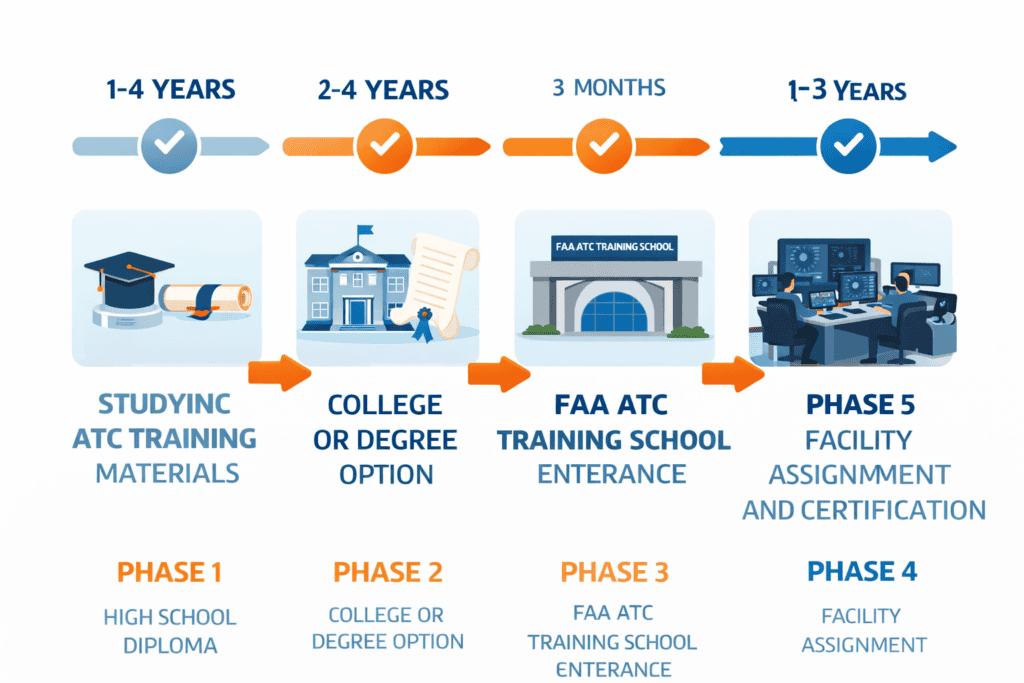
Career Growth Opportunities
Air traffic controllers can advance to:
- Senior controller roles
- Supervisor positions
- Training instructor
- Airspace planning specialist
- Aviation management roles
With experience, controllers may also move into regulatory or safety departments.
Is Air Traffic Control a Stressful Job?
Yes, it is a high-responsibility job. However, structured procedures, teamwork, and training reduce operational risk.
Modern technology also supports decision-making through advanced radar systems and automation tools.
Advantages of Becoming an ATC
- High job stability
- Respectable profession
- Good salary potential
- Contribution to aviation safety
- Opportunities for international experience
Challenges of the Career
- Intensive training
- Competitive selection process
- High concentration requirement
- Shift-based working schedule
Frequently Asked Questions
Is air traffic control a government job?
In most countries, yes. Controllers work under national aviation authorities.
Do air traffic controllers fly aircraft?
No. They guide aircraft from the ground.
Is math important for ATC?
Yes. Basic mathematics and spatial awareness are important.
Can women become air traffic controllers?
Yes. The profession is open to all qualified candidates.
Final Thoughts
Becoming an air traffic controller is a challenging yet rewarding career path in aviation. It requires dedication, strong communication skills, and the ability to work under pressure.
For individuals passionate about aviation systems and safety management, ATC offers a stable and respected professional journey.
If you are interested in aviation but prefer a ground-based career, air traffic control could be the right choice for you.
Pingback: Highest Paying Jobs in the Aviation Industry (2026 Salary Guide)