About the Author: Knight is an aviation professional with extensive experience in airport operations and aviation career development. He specializes in helping aspiring aviation professionals understand career paths, salary expectations, and advancement opportunities. His expertise comes from working directly with aviation employers and industry professionals. Kinght’s mission is to make complex aviation career information accessible to everyone interested in the aviation industry.
Introduction
Most travelers view airports as simple facilities where planes take off and land. However, modern airports are complex businesses generating billions of dollars annually through diverse revenue streams. From landing fees charged to airlines to shopping and dining operations, parking facilities to currency exchange, airports have become sophisticated revenue-generating enterprises that rival major corporations in their operational complexity and financial scale.
Understanding how airports make money provides insight into why certain operational decisions are made, why certain facilities exist, and how the aviation industry sustains itself. Whether you’re interested in aviation careers, airport management, or simply curious about how these massive operations stay financially viable, this comprehensive guide explores every major revenue stream airports utilize to fund operations, improvements, and expansion.

1. Landing Fees and Air Navigation Service Charges
The most obvious and fundamental revenue source for airports is landing fees charged to airlines. When an aircraft lands at an airport, the airline operating that flight pays a fee based on the aircraft’s maximum takeoff weight (MTOW) or other metrics. These fees vary dramatically depending on the airport size and importance.
At major international airports like Atlanta or Los Angeles, a Boeing 747 landing fee might be $3,000-$8,000, while at regional airports, the same aircraft might pay only $500-$1,500. Smaller regional aircraft pay proportionally less, with regional jets paying $100-$500. Over a year, major airlines landing hundreds of flights daily at a hub airport can generate tens of millions in landing fee revenue for that airport.
Additionally, airports collect air navigation service charges based on aircraft weight and route distance. These charges support air traffic control operations and navigational services. Major airports generate $100+ million annually just from landing fees and navigation charges. This is why airlines carefully consider airport choice for expansion and are attracted to airports offering fee reductions or incentives.
2. Terminal Rents and Building Space
Airports own massive terminal buildings and rental space, which they lease to airlines, retailers, and service providers. This represents another major revenue source. Airlines pay substantial rent for ticket counters, gates, baggage handling facilities, and administrative offices. Major airlines like United or Delta might pay millions annually in terminal rent at hub airports.
Beyond airlines, airports rent space to:
- Retail shops – Hudson News, bookstores, specialty retailers
- Restaurants and cafes – Starbucks, McDonald’s, sit-down restaurants
- Currency exchange services – Exchange desks in international terminals
- Car rental companies – Car rental counter space and facility rent
- Hotel and ground transportation operators – Ride-share pickup zones
- Service providers – Cleaning services, maintenance contractors, suppliers
Large international airports have extensive retail and dining areas, often generating $50-200+ million annually from tenant rent and revenue-sharing agreements. This is why major airports are constantly renovating and improving terminal facilities—better facilities attract higher-paying tenants. For information on airport operations and how these spaces are managed, see our article on airport operations.
3. Concessions and Revenue Sharing
Beyond rental income, airports negotiate concession agreements where retailers and restaurants pay rent plus a percentage of sales revenue. A coffee shop might pay rent plus 10% of daily revenue. A clothing store might pay a percentage of sales to the airport. With millions of passengers passing through terminals annually, concession revenues can be substantial.
A busy international airport might have 100+ retail and dining vendors, generating total concession revenues of $100-300+ million annually. This creates strong incentive for airports to keep terminals clean, safe, and attractive—better environments increase passenger spending and airport revenue. This is why you often see new renovations and expansions at major airports.
4. Parking Revenues
Airport parking represents a significant and highly profitable revenue source. Most airports operate multiple parking facilities: short-term parking near terminals (often $3-4 per hour), long-term parking for extended trips ($10-20 per day), valet parking services (often $25-40 per day), and economy parking ($5-15 per day). Additionally, many airports offer premium parking at higher rates.
A large airport serving 40+ million passengers annually might generate $50-150+ million from parking alone. This is why airports are increasingly investing in parking technology (automated parking systems, digital wayfinding) and expanding parking capacity. Peak travel periods generate exceptional parking revenue—major airports might see parking capacities approach 90%+ utilization during holiday travel periods.
5. Rental Car Facility Fees
Airports charge rental car companies fees for using airport facilities. Typically, rental car companies pay $1-4 per day per vehicle for parking and facility space at the airport. With thousands of rental vehicles on rotation, these fees generate substantial revenue—major airports collect $10-50+ million annually from rental car facilities. This is why you see rental car parking lots expanding at busy airports.
6. Ground Transportation and Taxi Services
Airports generate revenue from ground transportation operations. Taxi services pay airport licensing fees for the right to operate at the airport. Ride-sharing services (Uber, Lyft) pay per pickup or maintain revenue-sharing arrangements. Bus and shuttle services pay to use airport facilities. Parking has already been covered above, but ground transportation represents a separate revenue stream that can generate $5-30+ million annually at major airports.
7. Hotel and Hospitality Operations
Many airports operate or lease hotel properties directly on airport grounds or nearby. Airport hotels charge premium prices (travelers seeking convenience pay more) and generate both direct hotel revenue and associated tax revenue. Some airports generate $20-80+ million from hotel operations, particularly at international hub airports.
8. Advertising and Signage
Airports generate substantial revenue from advertising. Airlines pay for branded signage at their gates. Retailers and service companies pay for advertising throughout the terminal. Taxi services, hotels, and rental cars advertise extensively. Major airport terminals are essentially advertising spaces, generating $20-50+ million annually from advertising contracts. Digital advertising (displays, digital signage) is increasingly important and profitable.
9. Food and Beverage Operations
Beyond concessions already mentioned, airports often operate their own food and beverage facilities. Some airports operate restaurants directly, capturing 100% of profits rather than just rent and percentages. Airlines also purchase beverages and snacks at wholesale prices from airport providers for flights. The volume of travelers and captive audiences (people waiting for flights with limited options) creates exceptional food and beverage margins. Major airports generate $50-150+ million annually from food and beverage operations.
10. Cargo Operations and Freight Services
Airports generate revenue from cargo operations—airlines moving freight and packages pay landing fees, facility charges, and storage fees for cargo handling. During periods of high e-commerce and shipping volume (holiday seasons, post-pandemic recovery), cargo revenue can be exceptional. Major cargo hubs like Memphis or Frankfurt generate $100+ million annually from cargo alone. For context on ground operations, see our article on ground handling jobs.
11. Passenger Facility Charges (PFCs)
In the United States, airports can collect Passenger Facility Charges—modest fees ($3-4.50 per passenger at most U.S. airports) dedicated to airport capital improvements. A major airport with 50+ million annual passengers can generate $150-250+ million annually through PFCs. While modest per passenger, the volume makes this substantial. These funds support terminal renovations, runway improvements, and infrastructure upgrades.
12. Government Subsidies and Grants
Many airports, particularly smaller regional airports, receive government subsidies and grants. Federal, state, and local governments support airports for economic development reasons, recognizing that good airport access attracts businesses and investment. Government funding is not a direct revenue source but significantly helps smaller airports remain operational. Major metropolitan airports typically don’t receive government subsidies, but regional airports depend on them.
13. In-Flight Services and Catering
While airlines technically operate in-flight services, airports support these operations through catering contracts and facility rent. Airport food service companies operate catering kitchens, prepare meals, and manage inventory. Airports benefit through rent, service fees, and percentage arrangements. This represents a relatively smaller but consistent revenue stream.
14. Maintenance and Service Facilities
Airports rent maintenance facilities and service areas to airlines and service providers. Aircraft maintenance, cleaning, repair, and inspection requires specialized facilities. Airlines pay to use these facilities or lease dedicated space. Additionally, aircraft de-icing, fueling, and other services generate fees. Major airports generate $30-100+ million from maintenance and service facilities annually.
15. Special Services and Fees
Airports charge for various special services:
- Meet and greet services – Charged by ground handlers ($20-50 per service)
- Wheelchair and assistance services – Fee-based services for passengers with mobility issues
- Premium lounge access – Airlines sell lounge access, and airports share revenue
- Baggage storage facilities – Left luggage services
- Business center services – Workspace rental, office services
- Custom inspection services – Specialized inspection and documentation services
These services might seem small individually but generate $5-20+ million annually at major airports.
Revenue by Airport Size
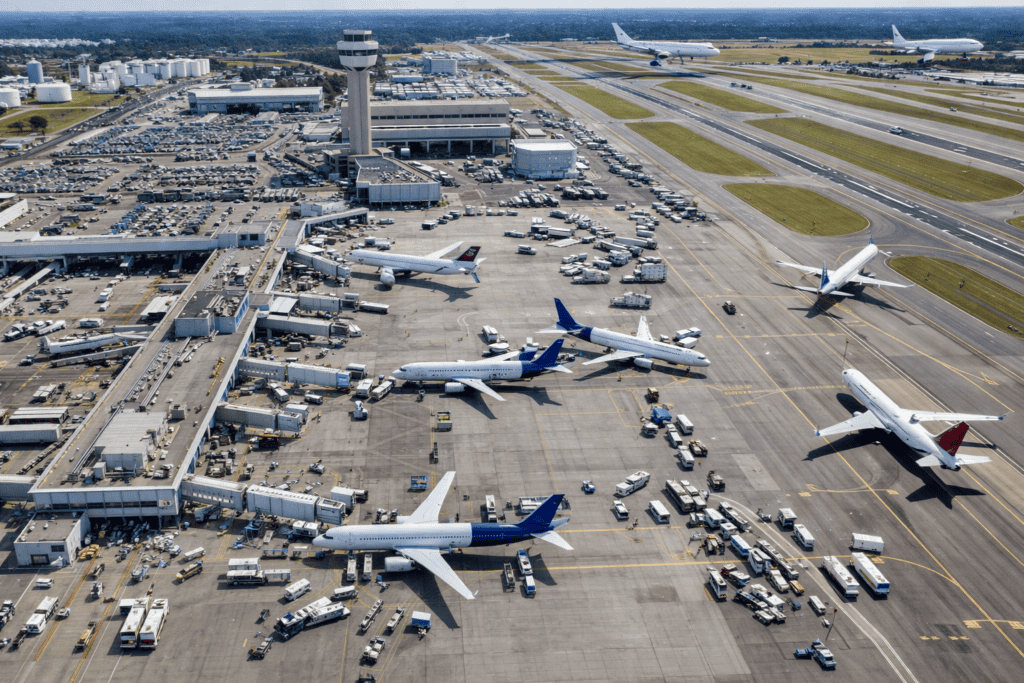
Revenue generation varies dramatically by airport size and operational significance. Mega-hubs (Atlanta, Los Angeles, Chicago, Dallas) generate $1+ billion annually from all sources, with landing fees and terminal rents representing the largest components. Large international airports (Denver, Phoenix, San Francisco) generate $800 million-$1+ billion annually. Major regional airports (Austin, Nashville, Charlotte) generate $200-500+ million annually. Small regional airports generate $20-100+ million, often heavily dependent on government subsidies.
How Airports Balance Multiple Revenue Streams
Successful airports carefully balance multiple revenue streams to maintain financial health. Aggressive landing fees discourage airlines from using the airport, reducing flight frequency and passenger volumes. Conversely, too-low landing fees generate insufficient revenue for operations and improvements. Similarly, excessive parking, food, and retail pricing drives passengers away or creates negative experiences that harm the airport’s reputation.
The most financially successful airports find balance: competitive landing fees that attract airlines, reasonable passenger fees, and excellent service that encourages passengers to spend money on parking, dining, and retail. This virtuous cycle—quality facilities attracting more airlines and passengers, generating higher revenues, funding better improvements—creates sustainable long-term success.
Challenges to Airport Revenue
Despite diverse revenue streams, airports face significant challenges. The COVID-19 pandemic dramatically reduced passenger volumes, causing airport revenues to plummet. The supply chain crisis affected retail and food operations. Rising construction costs make facility improvements expensive. Climate change creates insurance and infrastructure challenges. Competition from other airports in regions with multiple airports puts downward pressure on landing fees and facility charges.
Additionally, airline bankruptcies and consolidation have reduced bargaining power—fewer, larger airlines can negotiate lower rates. Changing travel patterns (remote work reducing business travel) permanently altered some airports’ revenue assumptions. These ongoing challenges mean airports must continuously innovate in revenue generation and operational efficiency.
Future Airport Revenue Opportunities
Looking forward, airports are exploring new revenue opportunities. Alternative fuels – Airports might generate revenue from sustainable aviation fuel (SAF) infrastructure. Electric aviation – Charging facilities for electric aircraft could become an emerging revenue source. Urban air mobility – Vertiports and facilities for electric vertical takeoff aircraft (eVTOL) represent potential new revenue streams. Cargo expansion – As e-commerce grows, cargo operations and facilities should generate increasing revenue. Ancillary services – Subscription premium facilities (luxury lounges, priority services) are expanding as revenue sources.
Conclusion
Airports generate revenue through surprisingly diverse mechanisms—not just landing fees, but parking, retail, restaurants, hotels, advertising, cargo, and dozens of other services. This diversity creates financial resilience, allowing airports to survive disruptions in any single revenue stream. Understanding these revenue sources provides insight into airport operations, explains why certain facilities exist, and helps you appreciate the complex business model underlying modern aviation.
If you’re interested in airport careers and want to understand the business side of airport operations, see our guides on airport management, airport duty manager responsibilities, and airport operations fundamentals.
Sources & References
- Airport Council International – Airport Economic Impact Data
- American Association of Airport Executives – Industry Research
- Federal Aviation Administration – Airport Financial Reports
- Transportation Research Board – Airport Revenue Studies
- Individual Airport Authority Financial Reports and Public Records