About the Author: Knight is an aviation professional with extensive experience in airport operations and aviation career development. He specializes in helping aspiring aviation professionals understand career paths, salary expectations, and advancement opportunities. His expertise comes from working directly with aviation employers and industry professionals. Kinght’s mission is to make complex aviation career information accessible to everyone interested in the aviation industry.
Introduction
Modern airports are among the world’s most complex operational systems. At major hubs like Atlanta, Dallas, or Los Angeles, hundreds of flights depart and arrive daily, coordinated by dozens of teams managing aircraft movement, passenger flow, cargo operations, and security. The seamless airport experience passengers enjoy—checking in, passing through security, boarding, and departing—masks extraordinary coordination happening behind the scenes.
Understanding airport operations provides insight into why certain facilities exist, explains how airlines and airports coordinate, and appreciates the professionalism of airport personnel managing these complex systems. This comprehensive guide explains how airports function daily, the teams involved, the procedures they follow, and how they coordinate to ensure safe, efficient operations.
Airport Operating Hours and Scheduling
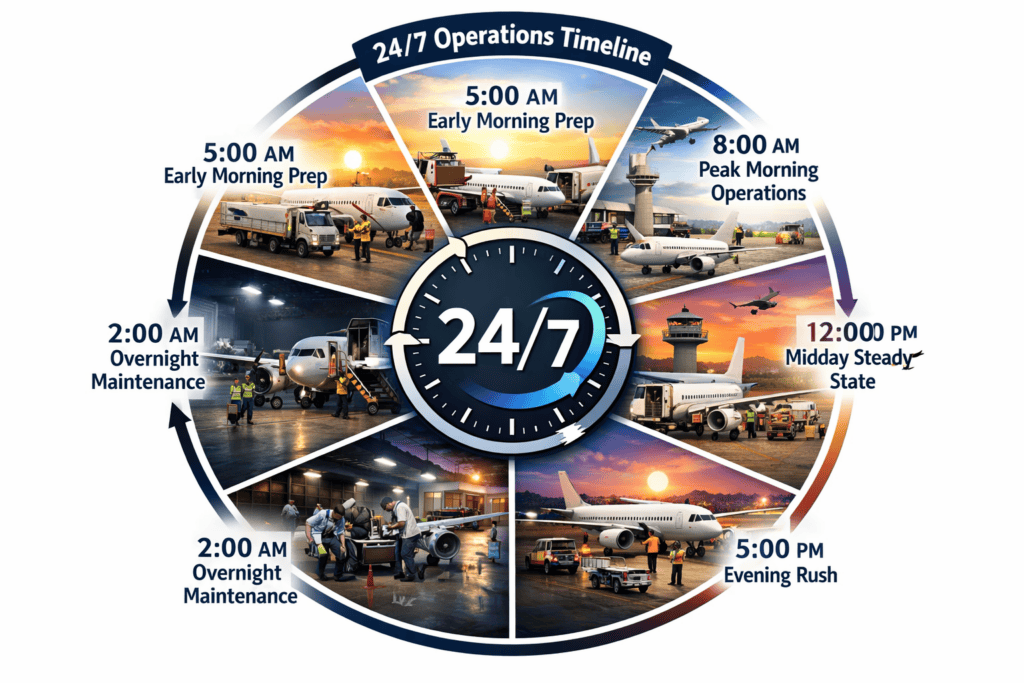
Most major commercial airports operate 24/7, with continuous aircraft movements around the clock. However, smaller regional airports might have limited operating hours—closing midnight to 6 a.m., for example. Operating hours affect crew scheduling, maintenance windows, and ground services availability.
Airports schedule operations around peak periods—morning and evening peaks when most passengers travel. Scheduling distributes aircraft movements to avoid overloading runways and taxiways during peak hours. For more information on how aircraft movements are managed, see our article on air traffic control procedures.
Terminal Operations
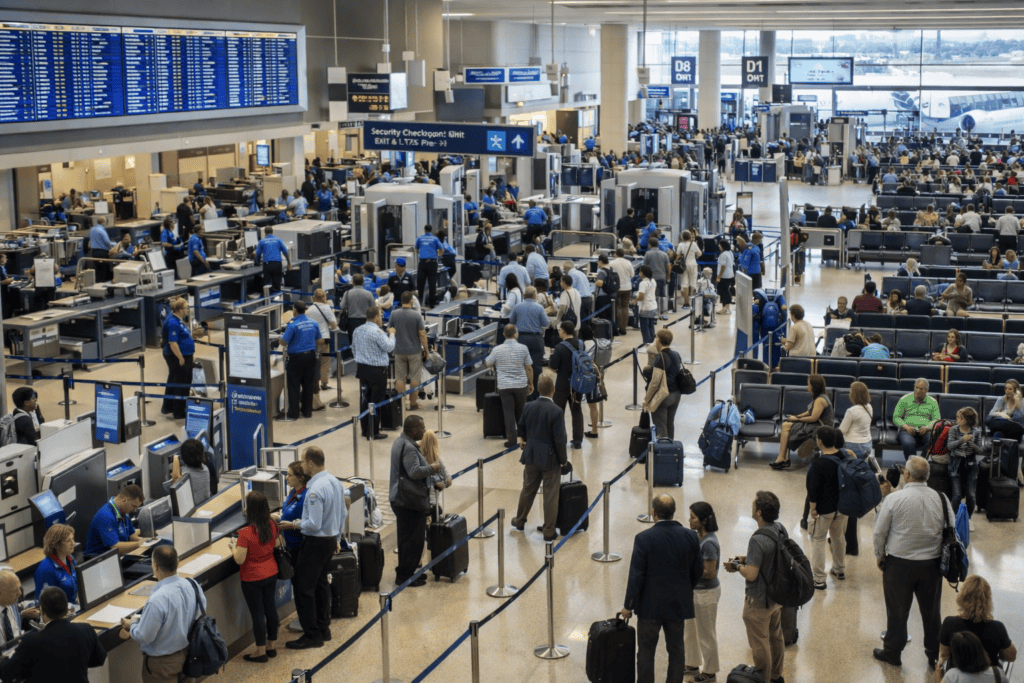
Passenger terminals are organized systematically to manage passenger flow from curb to gate to security to departure areas. Check-in typically occurs in large halls with dozens of agents processing passengers, issuing boarding passes, checking bags, and verifying passenger identification. Ground staff coordinate queues, manage wait times, and assist with issues.
Security checkpoints process passengers through TSA screening. Officers screen baggage, conduct passenger physical screening, and clear passengers for boarding. Multiple security lanes parallel-process passengers, minimizing wait times during peak periods.
Gate areas are where passengers board aircraft. Gate agents manage boarding, issue boarding passes for standby passengers, make boarding announcements, and coordinate with flight crews. For more on security procedures, see our guide on aviation security fundamentals.
Baggage claim areas are where passengers retrieve checked baggage. Conveyor systems deliver baggage from arriving aircraft, passengers identify their bags, and ground staff assist with issues. Baggage handling requires careful coordination—any baggage misdelivery (baggage routed to wrong airport) must be traced and re-delivered.
Airside Operations (Runways and Taxiways)
The airside is restricted to authorized personnel and aircraft only. Runways are where aircraft take off and land. Most major airports have multiple parallel runways enabling simultaneous operations. Taxiways are pathways aircraft use to move between runways and gates. Taxiway design affects how efficiently aircraft can move.
Gate positions (parking areas at terminals) are assigned by operations based on aircraft size, passenger volumes, and turnaround timing. Larger aircraft require larger gates. Gates near baggage systems facilitate faster baggage processing. Efficient gate assignment reduces taxi time and improves turnaround speed.
Ground movement is managed by ground control—a specialized air traffic control facility. Controllers monitor aircraft taxiing, issue taxi clearances, manage conflicts between aircraft and ground vehicles, and maintain safety as aircraft move around the airport.
Ground Support Operations
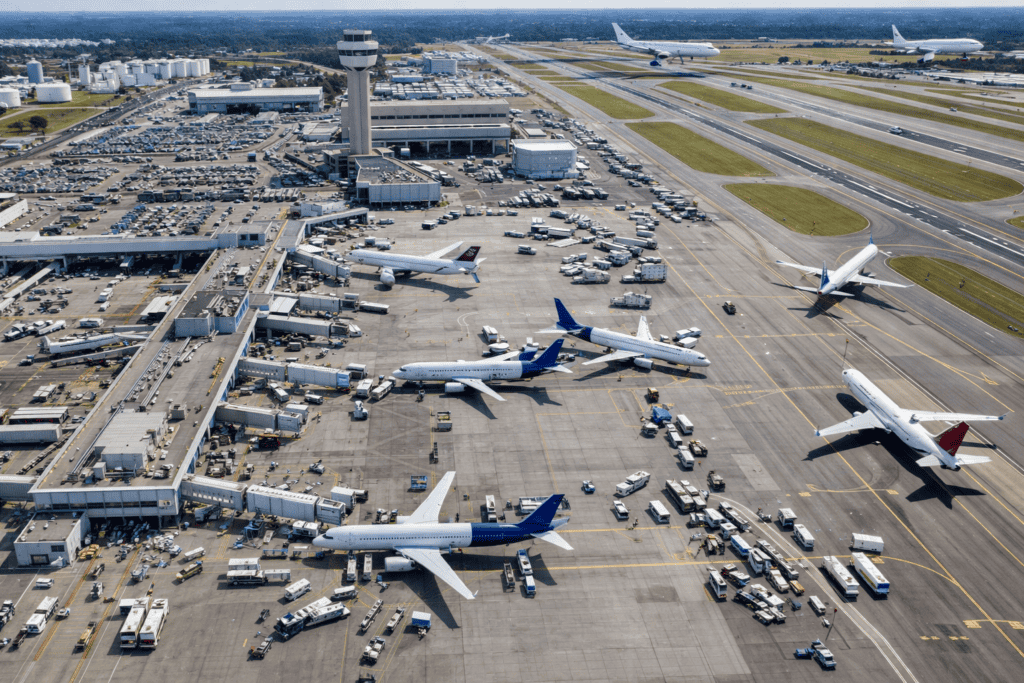
Baggage operations handle loading and unloading passenger and cargo baggage. Large airports might process 100,000+ bags daily. Baggage system automation sorts bags to proper destinations, ground crews load/unload bags, and tracking systems locate lost baggage.
Aircraft servicing includes refueling (fuel trucks connecting to aircraft), catering (meals and supplies loaded), waste management (lavatory servicing), and cabin servicing (restocking supplies). These services happen simultaneously during turnarounds, coordinated to minimize aircraft ground time.
Aircraft towing uses pushback tugs to move aircraft from gates. Tug drivers coordinate with pilots, ensuring safe movement in busy ramp areas. For more on pushback procedures, see our article on aircraft pushback explained.
Maintenance and inspections occur during aircraft turnarounds and overnight maintenance windows. Maintenance personnel perform required inspections, address mechanical issues, and ensure aircraft are safe for flight. For more on turnarounds, see our comprehensive guide on aircraft turnaround process.
Security and Access Control
Airport operations maintain strict security preventing unauthorized access to restricted areas. Badged personnel (employees with airport access) wear visible identification and undergo background checks. Vehicles access restricted areas only if drivers verify credentials. Surveillance cameras monitor restricted areas 24/7.
Access control systems (badge readers, gates) ensure only authorized personnel access secure areas. Perimeter fencing prevents public access to runways and taxiways. Security personnel monitor boundaries and respond to breaches. For more on aviation security, see our detailed guide on aviation security fundamentals.
Weather Management
Weather significantly impacts airport operations. Rain, snow, and thunderstorms reduce visibility, affecting aircraft operations. Extreme wind limits runway use. Icing conditions require de-icing of aircraft before flight. Airport operations managers monitor weather, coordinate with air traffic control regarding operational impacts, and adjust schedules as necessary.
Modern airports maintain de-icing services, snow removal equipment, and drainage systems managing water during heavy rain. Forecasting allows airports to pre-position equipment anticipating weather impacts.
Slot Management and Congestion
Airports have limited capacity—only a certain number of aircraft can depart and arrive per hour based on runway configuration. Major airports might accommodate 80-100 departures per hour at peak periods. When demand exceeds capacity, congestion results.
Ground holds keep aircraft at gates when ATC reports delays. Slot management assigns departure times, ensuring optimal flow. Rerouting redirects aircraft to alternate airports if the airport is congested. Congestion periods create expensive delays for airlines and frustration for passengers.
Staff Coordination and Chain of Command
Airport operations are coordinated by operations managers overseeing daily activities, making decisions on gate assignments and responding to issues. Duty managers oversee operations during specific shifts, ensuring all teams function properly. Supervisors manage specific teams—gate supervisors, baggage supervisors, maintenance supervisors.
Clear chains of command ensure decision authority and rapid communication during issues. If delays occur, duty managers coordinate response, assigning resources and communicating with airlines. For more on duty manager roles, see our article on airport duty manager responsibilities.
Emergency Procedures
Airports maintain emergency response plans for every conceivable crisis. Fire on an aircraft, medical emergency, severe weather, security threats—all have established procedures. Personnel train regularly on emergency responses ensuring rapid, coordinated reaction if crises occur. For comprehensive information, see our detailed guide on airport emergency response.
Passenger Experience Integration
While operations staff manage aircraft, ground crews, and systems, gate agents interact directly with passengers. Professional gate agents communicate delays, assist with boarding, and manage frustration professionally. Ground staff maintain cleanliness, ensure facilities function properly, and keep terminals pleasant.
Passenger experience depends on operational efficiency—short security lines reflect good queue management, timely departures depend on efficient turnarounds, good customer service depends on well-trained staff. Operations and customer service are deeply connected.
Modern Technology in Airport Operations
Modern airports use sophisticated systems managing operations. Flight information systems display flight status, gate assignments, and boarding information. Baggage tracking systems track bags from check-in through delivery. Gate management systems assign gates, coordinate turnarounds, and manage bridge equipment.
Air traffic management systems coordinate with ATC. Vehicle management systems track ground vehicles and equipment. Security systems monitor access and provide surveillance. These integrated systems provide real-time information enabling rapid decision-making.
24/7 Operations and Staffing
Continuous operations require extensive staffing. Airlines maintain 24-hour staffing for customer service, crew scheduling, and operations coordination. Airports maintain 24-hour operations and maintenance teams. Ground handling companies staff all shifts. Security provides 24/7 screening.
Shift work creates employee scheduling challenges—while some staff work traditional 9-5 shifts, many work nights, early mornings, and weekends. Fatigue management is important ensuring safety despite irregular hours.
Conclusion
Airport operations represent one of the world’s most complex logistical systems, coordinating hundreds of flights daily with thousands of personnel. From passenger check-in through flight departure, dozens of teams coordinate simultaneously ensuring safe, efficient operations. The smooth airport experience passengers enjoy reflects the professionalism and dedication of airport operations personnel.
Understanding airport operations explains why airports are structured the way they are, appreciates the coordination required, and demonstrates the professionalism of aviation personnel. For more on specific airport functions, see our guides on aircraft turnaround process, airport duty manager roles, ground handling jobs, and air traffic control.
Sources & References
- FAA Airport Operations Standards and Guidelines
- Airport Council International – Best Practices
- Transportation Research Board – Airport Operations Studies
Pingback: Air Traffic Control Explained | How ATC Keeps Flights Safe
Pingback: Aircraft Turnaround Process Explained (Step-by-Step Guide)
Pingback: Airport Manager Salary 2026: Pay & Career Guide
Pingback: Airport Duty Manager Responsibilities (2026 Guide)
Pingback: Airport Emergency Response Plan Explained (2026)
Pingback: Highest Paying Aviation Jobs (2026 Salary Guide)
Pingback: "How Aircraft Navigate: Modern Aviation Navigation Systems Guide 2026"
Pingback: "How Airports Make Money: Complete Revenue Breakdown & Profit Model 2026"