About the Author: Knight is an aviation professional with extensive experience in airport operations and aviation career development. He specializes in helping aspiring aviation professionals understand career paths, salary expectations, and advancement opportunities. His expertise comes from working directly with aviation employers and industry professionals. Kinght’s mission is to make complex aviation career information accessible to everyone interested in the aviation industry.
Introduction
Aviation security is the complex system of procedures, equipment, and personnel protecting passengers, aircraft, and airports from threats. Every passenger experiences security screening before boarding flights, but few understand why screening is conducted, what threats security protects against, how security systems work, or how security relates to overall airport operations.
Understanding aviation security provides insight into airport operations, explains why certain procedures exist, and appreciates the coordination required to protect hundreds of millions of passengers annually. This comprehensive beginner’s guide explains what aviation security is, what threats it addresses, how security screening works, and how security systems protect aviation.
What Is Aviation Security?
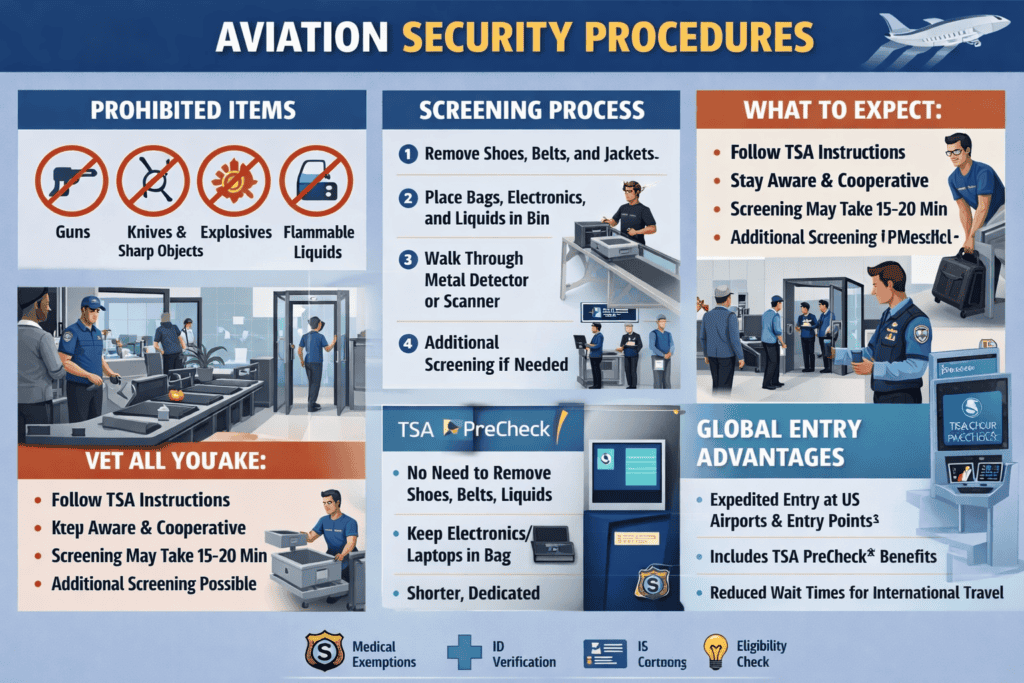
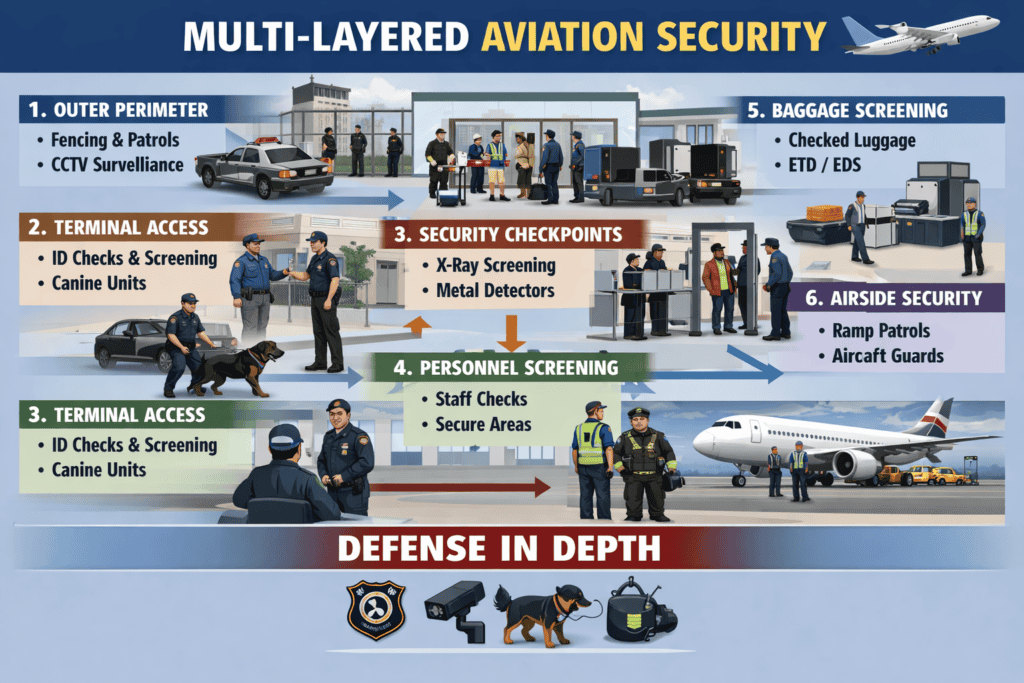
Aviation security encompasses multiple layers of protection including pre-flight passenger and baggage screening, airport perimeter security, aircraft access controls, air marshals on flights, and coordination with law enforcement and intelligence agencies. These layers work together to prevent aviation from being used as a weapon or platform for attacks.
Historical Context
Modern aviation security developed after the September 11, 2001 terrorist attacks, which used commercial aircraft as weapons. Before these attacks, aviation security was relatively minimal—passengers could bring items on board with less restriction, cockpit doors were not reinforced, and in-flight security was lighter. After 9/11, security was dramatically expanded to prevent similar attacks.
Pre-Flight Screening
Passenger identification begins security when passengers check in—airlines verify passenger identity using government-issued identification, comparing passenger name to the ticket purchased. No-fly lists are checked—databases of people prohibited from flying are consulted, preventing known threats from boarding.
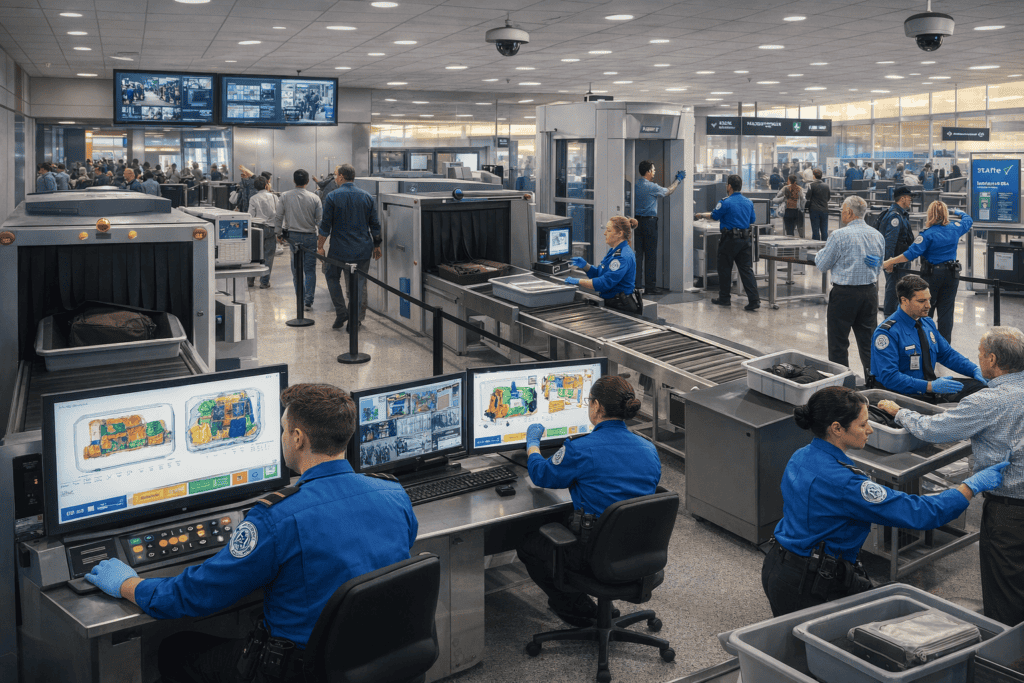
Baggage screening involves two types—checked baggage (loaded in cargo holds) is screened using explosive detection equipment, X-ray machines examine bags for prohibited items, and automated systems identify suspicious items. Carry-on screening involves passengers placing bags through X-ray machines at security checkpoints, where TSA officers examine contents.
Passenger physical screening involves passengers walking through metal detectors or advanced imaging technology (millimeter-wave scanners) that detect metal or other suspicious items. If alarms trigger, officers conduct pat-downs to identify what triggered alarms. Officers are trained to conduct screening professionally and respectfully.
TSA and Security Personnel
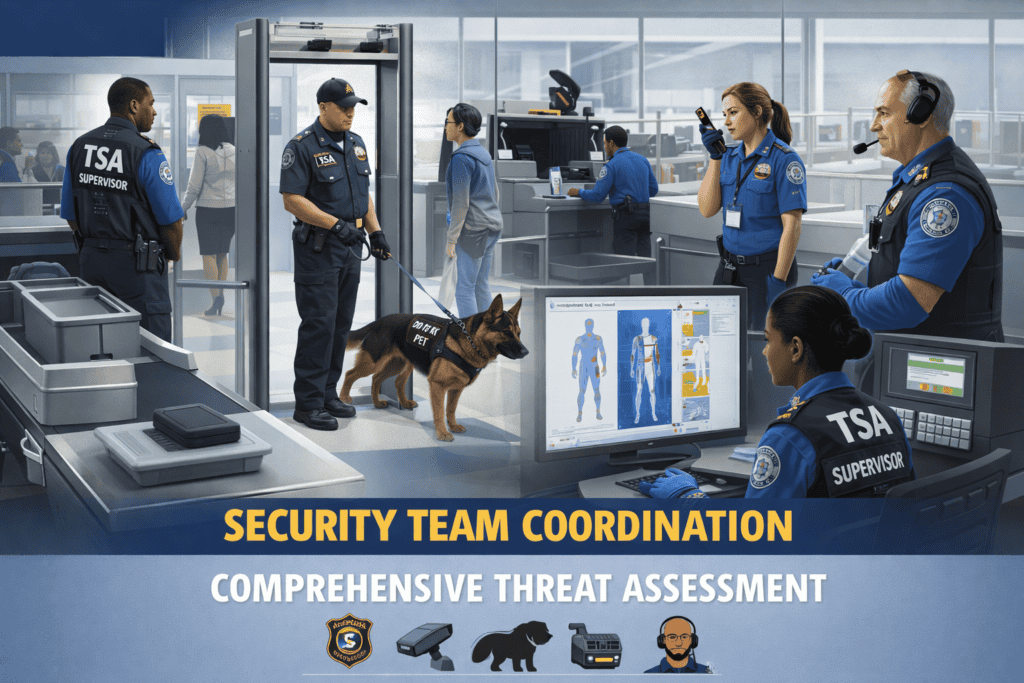
The Transportation Security Administration (TSA) operates security at most U.S. airports. TSA officers conduct passenger and baggage screening, determine what items are allowed through security, and identify suspicious situations. TSA officers complete training programs and receive ongoing education.
Some airports use private security companies instead of TSA, though requirements are similar. Airport security also includes badge personnel (employees with airport access) undergoing background checks and periodic re-screening to ensure they’re not security threats.
Prohibited Items
TSA maintains a list of items prohibited on flights for security reasons. Weapons (firearms, knives, explosives) are strictly prohibited. Flammable materials (lighters with fuel, fireworks) are prohibited due to fire risk. Hazardous materials (chemicals, biohazards) are prohibited due to public safety risk. Realistic weapon replicas can be confiscated if they appear authentic.
Permitted items vary—while guns are prohibited in carry-on baggage, they can be transported in checked baggage if declared and packed in locked cases. Certain sports equipment (baseball bats, golf clubs) is permitted in carry-on if small enough, prohibited if in checked baggage. The TSA website (tsa.gov) provides detailed guidance on what’s allowed.
Airport Perimeter Security
Beyond passenger screening, airports maintain physical security preventing unauthorized access to aircraft and secure areas. Fencing, gates, and barriers prevent public access to runways and taxiways. Badged personnel (employees with airport access) wear visible identification and undergo background checks.
Vehicles accessing airport areas are inspected, and drivers verify their credentials. Parking areas are monitored. Restricted area boundaries are clearly marked and enforced. Access control systems (badge readers, gates) ensure only authorized people access secure areas.
Cockpit Security
After 9/11, cockpit doors were reinforced to prevent intruders. Cockpit access is now controlled—pilots must verify the identity of anyone requesting cockpit entry before opening doors. Reinforced doors withstand impact and can’t be forced open. This prevents hijackers from accessing the flight deck and using aircraft as weapons.
Air Marshals
Federal air marshals (armed law enforcement officers) are assigned to certain flights to prevent in-flight threats. While most flights don’t have visible air marshals, their presence on some flights deters potential threats. Air marshals are highly trained in de-escalation, weapons handling, and emergency response.
Coordination with Law Enforcement
Airport security works closely with law enforcement and federal agencies. FBI presence at airports provides intelligence on potential threats. Local police provide law enforcement. Homeland Security and Immigration and Customs Enforcement (ICE) are involved at international airports. Information sharing between agencies helps identify threats.
Challenges and Evolving Threats
Aviation security must constantly evolve as threats change. New weapons or tactics are identified, requiring new screening procedures. Insider threats—airport employees with access to secure areas—require background checks and monitoring. Drone interference near airports requires new detection and response procedures.
Balancing security with passenger convenience is challenging—extensive security creates inconvenience and long lines. Security must be effective without being unnecessarily burdensome. Continuous evaluation determines whether procedures effectively reduce risks relative to inconvenience they create.
Costs of Aviation Security
Aviation security is expensive—TSA operations cost billions annually, funded through passenger security fees and government appropriations. Airports invest in security equipment, perimeter fencing, and personnel. This cost is substantial, but aviation industry considers it necessary to maintain public confidence in safe travel.
International Aviation Security
Every country operating commercial aviation implements security measures. International standards set by the International Civil Aviation Organization (ICAO) establish baseline requirements. However, security levels and procedures vary by country based on their threat assessments and resources.
Conclusion
Aviation security represents a complex, multi-layered approach to protecting passengers and aircraft. From baggage screening to cockpit security to air marshals, these systems work together to prevent aviation from being used as a weapon or platform for attacks. While security creates inconvenience through long lines and restrictions, the measures significantly reduce aviation security risks.
Understanding aviation security explains why procedures exist, appreciates the coordination required to protect aviation, and demonstrates the industry’s commitment to passenger safety. For more on airport operations and safety, see our guides on airport operations fundamentals and airport emergency response procedures.
Sources & References
- Transportation Security Administration (TSA) – Security Procedures and Regulations
- Federal Aviation Administration – Aviation Security Standards
- Department of Homeland Security – Security Guidelines
Pingback: Aviation Security vs Aviation Safety: Key Differences Explained
Pingback: Aviation Careers Guide: Jobs in the Aviation Industry
Pingback: Airport Operations Explained: How Airports Function Daily
Pingback: Aviation Regulations: Who Controls Global Aviation?
Pingback: Aviation Security and Airport Operations: How They Work Together
Pingback: Airport Ground Handling Jobs: Roles, Salary & Career Path
Pingback: Airport Security Supervisor Salary (2026 Guide)