“About the Author: Knight is an aviation professional with extensive experience in airport operations and aviation career development. He specializes in helping aspiring aviation professionals understand career paths, salary expectations, and advancement opportunities. His expertise comes from working directly with aviation employers and industry professionals. Kinght’s mission is to make complex aviation career information accessible to everyone interested in the aviation industry.”
What happens when an aircraft instrument breaks during a flight? Does the plane have to land immediately? Do airlines cancel the flight?
Not necessarily. This is where Minimum Equipment Lists (MEL) come in.
The Concept of MEL
A Minimum Equipment List is an FAA-approved document that specifies which equipment an aircraft can operate without.
The Concept:
Aircraft are designed with redundant systems. If one system fails, backups exist.
Examples:
- Dual engines (if one fails, other operates)
- Dual hydraulic systems (if one fails, other provides backup)
- Multiple instruments (if one fails, others show same information)
MEL Logic:
If redundancy exists and one system fails, the aircraft can usually operate safely to the nearest airport for repair.
This is why planes don’t land immediately when equipment fails.
Regulatory Framework
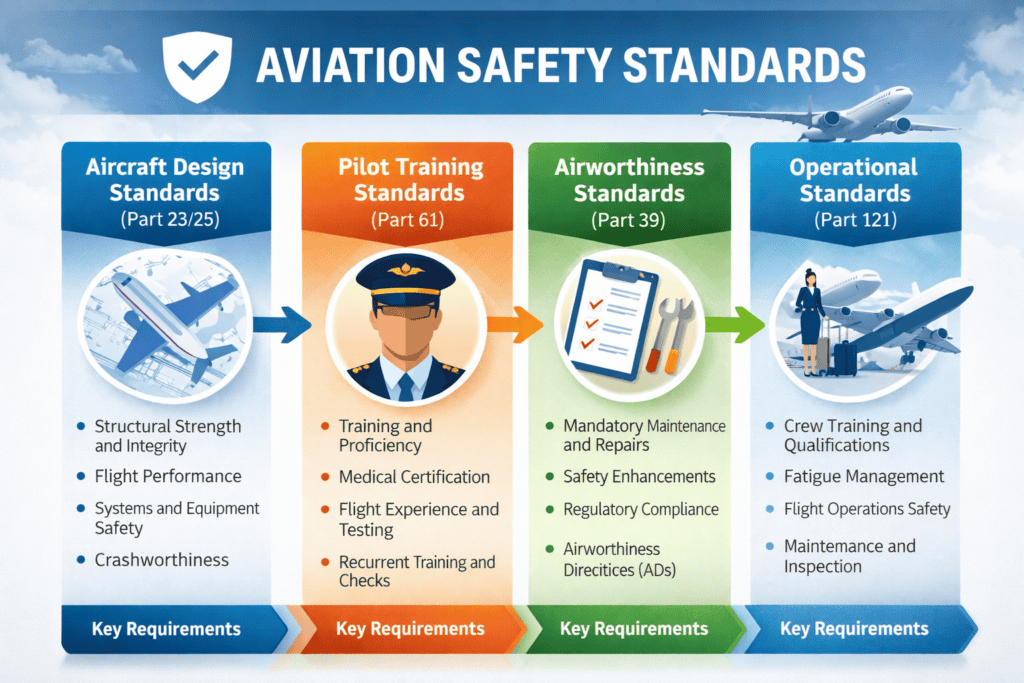
The FAA establishes clear rules for MEL operations.
Equipment Requirements:
- Lists all equipment required for flight
- Specifies which equipment is essential
- Specifies which equipment is backup
- Explains requirements for safe operation
MEL Development:
- Each aircraft manufacturer develops MELs for their models
- FAA must approve MELs
- MELs are updated as systems change
- Airlines must follow approved MELs
Pilot Authority:
- Pilots must follow MEL requirements
- Pilots cannot decide to ignore MEL rules
- Violations can result in pilot certification loss
- Airlines enforce MEL compliance
Why MEL Exists
Safety, efficiency, and economics all support MEL systems.
Safety:
Paradoxically, MEL improves safety by allowing aircraft to operate to maintenance facilities instead of declaring emergencies.
Example: Without MEL rules, every instrument failure equals emergency landing With MEL, non-critical failures allow continue to nearest suitable airport. This is safer.
Efficiency:
Airlines can complete trips safely even with minor equipment failures.
Economics:
Airlines don’t have to cancel flights for every minor equipment failure, which is economically important for operations.
How MEL Works in Practice
Example Scenario:
An aircraft’s right engine oxygen system fails during flight. According to MEL, the aircraft can operate with one failed oxygen system if:
- The other oxygen system is fully functional
- Backup oxygen bottles are available
- Required procedures are followed
- Nearest suitable airport is within distance limits
- Weather permits safe landing
Decision:
Captain consults MEL document:
- Confirms failure is listed in MEL
- Confirms backup systems operational
- Confirms requirements can be met
- Makes decision to continue or land
Action:
- Crew executes required procedures
- Crew maintains constant monitoring
- Crew notifies maintenance
- Aircraft continues to nearest suitable airport
- Maintenance repairs system on ground
The flight continues safely.
Common MEL Items
Examples of Equipment That Can Fail:
Air Conditioning – If one system fails, aircraft can operate with second system functional. Aircraft may be more uncomfortable but safe.
Lighting – Landing lights can fail; anti-collision lights are backup. Aircraft can operate with backup lighting.
Windshield Wipers – Aircraft can fly without wipers in dry conditions. Weather restrictions apply.
Lavatories – Aircraft can operate with one lavatory out of service. Limits passenger comfort but doesn’t affect safety.
Galley Equipment – Non-operational galleys don’t affect flight safety. Passengers receive limited food service.
Seat-Belts – All seat-belts must be operational. Non-functional belt row cannot be used.
The Maintenance Requirement
Deferred Maintenance:
- Equipment failures are recorded in maintenance log
- Airlines must repair equipment before next flight
- FAA inspects maintenance records
- Compliance is mandatory
Timeline:
- Critical items: Fixed before any flight
- Important items: Fixed within several flights
- Non-critical items: Fixed within reasonable timeframe
Tracking:
- All MEL deviations are tracked
- FAA audits show compliance
- Airlines must document why items haven’t been fixed
- Repeated deferral requires justification
Passenger Safety Implications
Passengers Should Know:
- MEL equipment failures don’t represent safety risks
- Aircraft are designed with redundancy
- Backups are verified operational
- Repairs happen quickly
- Airline wouldn’t operate if unsafe
MEL Allows:
- Flights to continue safely with minor failures
- Maintenance to happen systematically
- Passengers to reach destinations
- Airlines to operate efficiently
MEL is NOT:
- Permission to fly unsafe aircraft
- An excuse for poor maintenance
- A way to avoid necessary repairs
- A safety compromise
Examples of What Cannot Be Deferred
Critical Safety Items Cannot Be Deferred:
Engines – All engines must be operational. No engine can be down. Exception: Aircraft can fly to nearest suitable airport to fix.
Flight Controls – All flight control surfaces must function. No hydraulic systems can be failed. No control failure is acceptable.
Landing Gear – Landing gear must function properly. Brakes must be operational. No landing safety system can be compromised.
Flight Instruments – Primary flight instruments must function. Backup instruments must be available. Navigation equipment must work.
The Core Principle:
If equipment is critical to safety, it cannot be deferred under MEL.


Modern MEL Examples
Boeing 737:
- Complex MEL document (100+ pages)
- Specifies 200+ potential equipment failures
- Each failure has specific operational requirements
- Airlines follow this document exactly
Airbus A350:
- Similar complexity
- Different systems structure
- Specific MEL for this aircraft type
- Crew trained on Airbus-specific MEL
The Inspection Process
Ground Maintenance:
- Technicians inspect failed equipment
- Determine if equipment must be fixed before flight
- Check if MEL allows deferral
- Perform repair or schedule repair
Documentation:
- Maintenance logs recorded
- MEL compliance verified
- Pilot briefed on any deferred items
- Captain signs off on MEL compliance
Crew Notification:
- Captain receives maintenance briefing
- All deferred items are listed
- Operational limitations are explained
- Captain acknowledges and accepts limitations
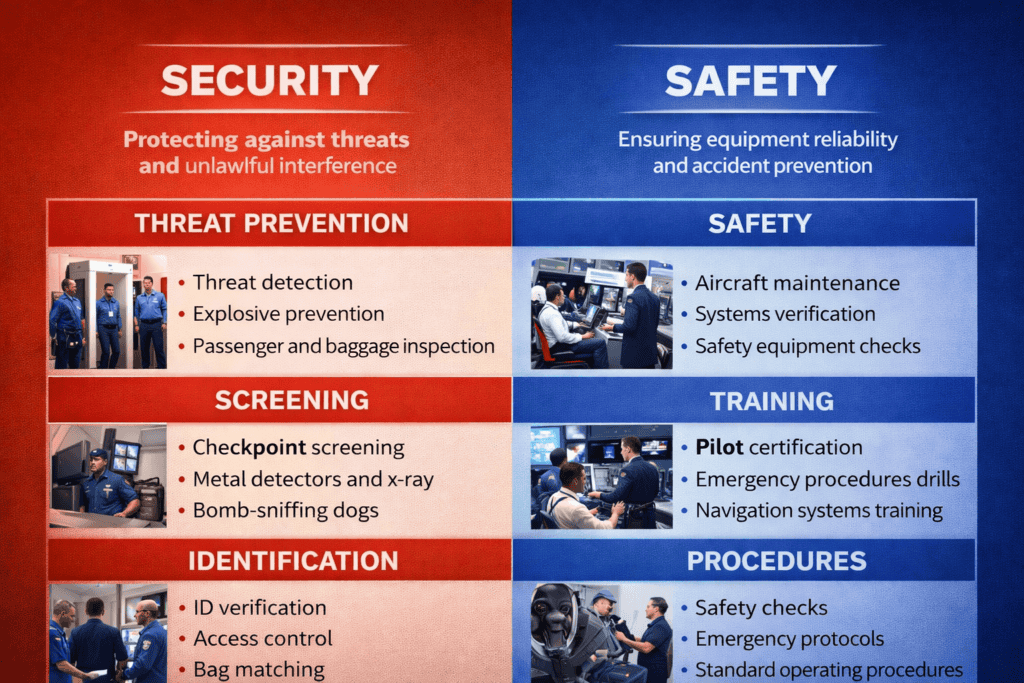
“Airport operations involve coordination between multiple teams, all focused on one primary goal: passenger safety. Understanding how these complex systems work together reveals the depth of aviation safety. The relationship between aviation security and aviation safety is often misunderstood, but both are essential to keeping flights safe. While security focuses on external threats, safety systems manage mechanical and operational risks. Learning how these systems integrate helps you appreciate the layers of protection on every flight you take.”
Conclusion
Minimum Equipment Lists are sophisticated regulatory documents balancing safety and operational efficiency.
They allow aircraft to continue operations safely when non-critical equipment fails, rather than grounding aircraft for minor repairs.
This improves safety by allowing crews to reach appropriate maintenance facilities instead of declaring emergencies.
The next time your flight experiences equipment issues, understand that MEL rules ensure your safety is never compromised.
Your pilot is carefully following established procedures to keep you safe.