You’re sitting on an aircraft on the tarmac. The doors have closed. You’ve been waiting 45 minutes, then an hour, then two hours.
What are your rights? How long can airlines keep you waiting? When is this illegal?
The answer involves FAA regulations, airline policies, and passenger rights.
What Is a Tarmac Delay?
A tarmac delay occurs when an aircraft is on the ground (not at the gate) and passengers are unable to exit the aircraft.
Common Causes:
- Mechanical problems
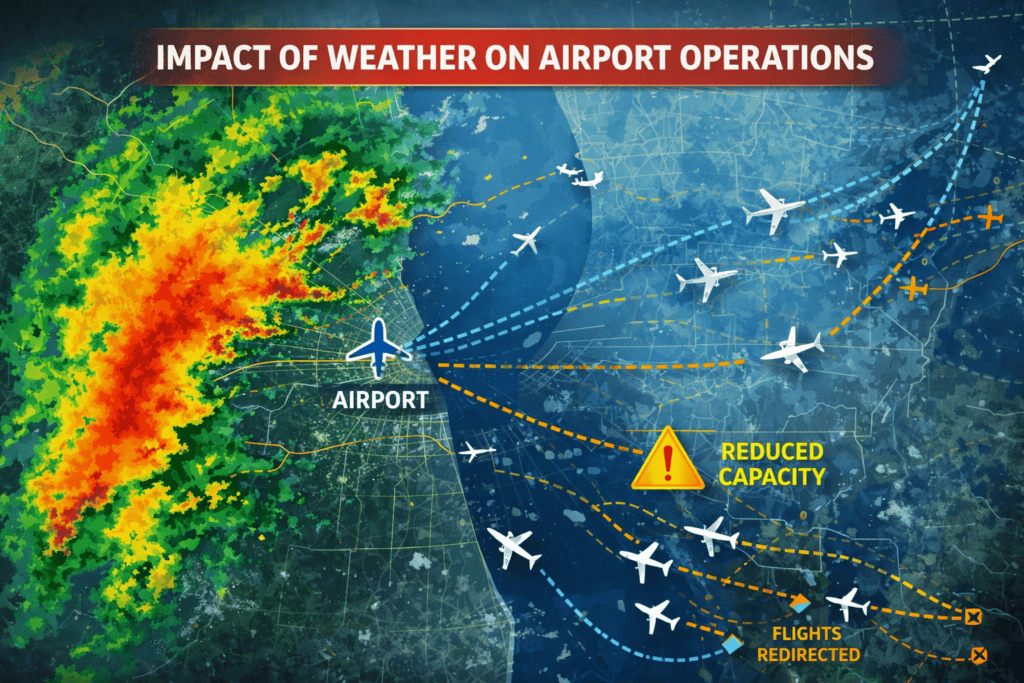
- Weather delays
- Waiting for gate availability
- Crew duty time limits
- Equipment issues
- Air traffic control delays
- Flight plan issues
- Operational problems
Duration:
Can range from 30 minutes to several hours.
The 3-Hour Rule
Federal regulation establishes clear time limits for tarmac delays.
Requirements:
If an aircraft remains on the tarmac for 3 hours (domestic) or 2 hours (international) WITHOUT DEPLANING:
- Airline must return aircraft to gate
- Passengers must be allowed to exit
- No exceptions for mechanical or weather problems
This is a mandatory federal rule.
Purpose of the Rule
The rule protects passengers from indefinite confinement on aircraft.
Health Concerns:
- Restrooms can overflow
- Air quality deteriorates
- Temperature control issues
- Medical emergencies can occur
Safety:
- Dehydration risk
- Psychological stress
- Potential conflicts
- Health complications
The 3-hour limit ensures passenger welfare is prioritized.
What Airlines Must Do During Tarmac Delays
During the wait, airlines must provide essential services:
Required Services:
- Drinking Water – Accessible water available. Sufficient quantity. Continuously available.
- Lavatories – Functional and operational. Adequate supply of supplies. Proper waste management.
- Means of Communication – Access to telephone (reduced cost). Ability to contact outside. Communication capability maintained.
- Comfort Measures – Adequate temperature control. Safe conditions maintained. Medical assistance available.
After 3 Hours
If 3 hours passes without departure, the airline MUST take specific actions:
Return to Gate:
- Aircraft must return to airport terminal
- Passengers must be allowed to exit
- Passengers can leave aircraft
Options for Passengers:
- Deplane and leave the airport
- Remain in terminal
- Wait for another flight
- Rebook on different flight/airline
Cancellation:
- Flight may be cancelled
- Passengers eligible for compensation
- Rebooking options provided
No Additional Waiting:
- Passengers cannot be boarded again
- Aircraft must remain at gate
- If waiting continues, passengers must deplane
The Rules Apply to Everyone
The rules apply to all flights without exception:
- Weather delays
- Mechanical problems
- Crew issues
- Air traffic control delays
- Any reason
Enforcement:
- FAA monitors compliance
- Airlines face penalties
- Violations can result in fines
- Repeated violations result in larger fines
Passenger Rights:
Passengers have these rights regardless of cause of delay.
Crew Duty Time Limits
Pilots and flight attendants have legal duty time limits that can affect delays.
Crew Limitations:
- Cannot work beyond certain hours
- Must have rest periods
- Cannot be pressured to violate limits
Impact on Tarmac:
If crew reaches duty time limit:
- Flight must land, crew replaced, or flight cancelled
- Crew cannot legally continue
- Violating this is illegal
- Pilot must refuse to fly
Result:
Sometimes flights are cancelled not due to mechanical reasons but due to crew duty time. This is legal and necessary.
Passenger Compensation Rights
Compensation varies based on delay duration and circumstances.
Delayed Flights:
- 1-3 hour delay: Airline determines compensation
- 3+ hour delay: Typically entitled to compensation
- Amount varies by airline policy
International Flights:
- EU regulations provide specific compensation
- Up to €600 depending on distance
- US regulations vary
Cancellations:
- Passengers can rebook or receive refund
- Compensation may apply
- Rights depend on airline policy and location
The 3-hour tarmac rule is separate from compensation for delays.
What Happens After Passengers Deplane
After passengers deplane at 3 hours, several outcomes are possible:
Aircraft Options:
- Repair completed → Aircraft may depart with rebooked passengers
- Mechanical unfixable → Flight cancelled
- Weather improves → Aircraft may depart
- Other issues → Flight remains cancelled
Passenger Options:
- Rebook on next available flight
- Rebook on competitor airline
- Request refund
- Accept airline vouchers
Timeline:
If passengers deplane at 3 hours, airline must provide updated options within certain timeframe.
History of the Rule
Before and after the rule changed things dramatically.
Before 2010:
- No time limit on tarmac delays
- Airlines could keep passengers waiting indefinitely
- 1999 incident: Aircraft stuck 8+ hours on tarmac
- Passengers faced inhumane conditions
2010 Reform:
- DOT implemented 3-hour rule
- Applied to all domestic flights
- Mandatory deplanement requirement
- Significant improvement
Airline Perspective
Airlines manage delays carefully but face real constraints.
Why Airlines Have Delays:
- Safety concerns (mechanical issues)
- Weather (can’t take off safely)
- Air traffic control (airport/airspace congestion)
- Crew duty times (regulatory limits)
Why Not Just Return to Gate?
- Rebooking creates operational complexity
- Fuel waste returning to gate
- Passenger management challenges
- May still miss the window for departure
The Conflict:
Airlines want to depart; passengers want off. The 3-hour rule balances both.
Current Issues and Discussions
The DOT continues monitoring and improving the system.
DOT Monitoring:
- Enforces 3-hour rule
- Tracks airline compliance
- Publishes statistics
- Works with airports on improvement
Frequent Delays:
- Some airports have chronic delays
- Seasonal patterns
- Certain airlines reported more delays
- DOT works to improve processes
Future Changes:
- Potential shorter time limits
- Potential stricter enforcement
- Passenger rights expansion
- Technology to prevent delays
Practical Advice for Passengers
If You Experience a Tarmac Delay:
1. Stay Calm:
- Airlines are required to provide information
- There is a time limit
- Conditions are being monitored
2. Know Your Rights:
- 3-hour rule (domestic)
- 2-hour rule (international)
- Request information from crew
- Ask about options
3. Document the Delay:
- Note departure time
- Note deplaning time
- Keep receipts for expenses
- Take photos if necessary
4. File Complaint if Applicable:
- DOT complaint system available
- Airlines investigated for violations
- Complaints help improve enforcement
5. Seek Compensation if Entitled:
- Check airline policy
- File claim for compensation
- Provide documentation
- Follow airline procedures
Conclusion
The 3-hour tarmac rule represents significant passenger protection that didn’t exist before 2010.
It ensures that passengers cannot be indefinitely confined on aircraft.
While delays happen and are frustrating, airlines must follow federal rules protecting passengers.
Understanding these rules helps you know your rights during delays.
The next time you experience a tarmac delay, remember that your rights are protected by federal law.