The aircraft suddenly shakes. Unsecured items shift. Passengers grip armrests. For nervous flyers, turbulence creates anxiety despite being a normal, manageable flight condition.
Understanding what causes turbulence and why it’s safe helps reduce flight anxiety.
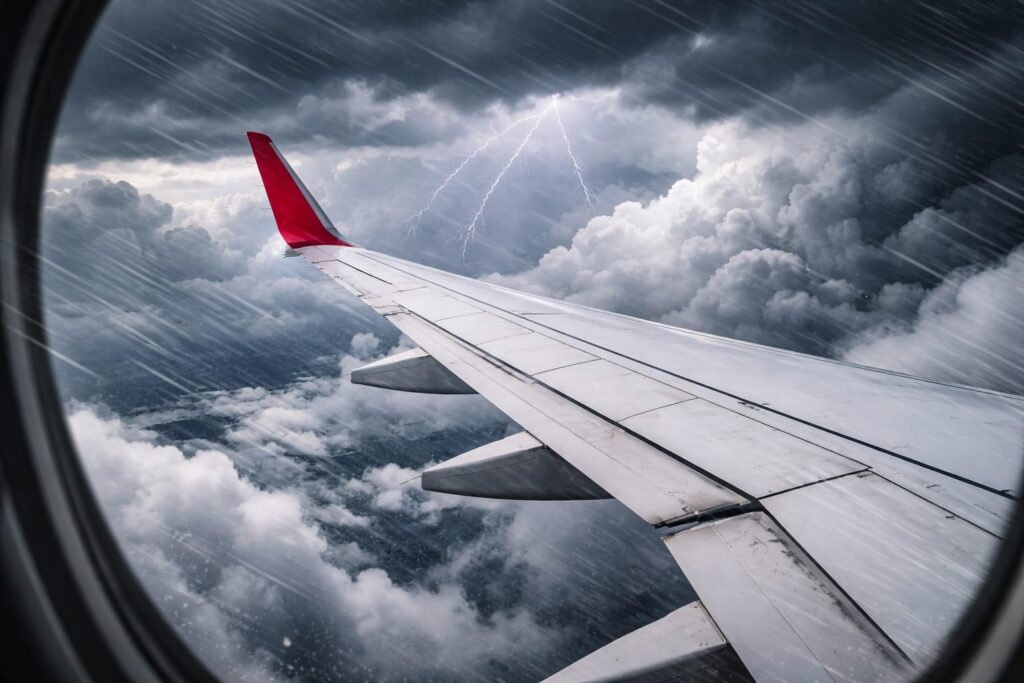
What Is Turbulence?
Turbulence is irregular, unpredictable movement of an aircraft caused by atmospheric conditions.
Physics of Turbulence:
Air is not a solid, uniform medium. It contains:
- Temperature variations
- Pressure differences
- Wind shear (changing wind speed/direction)
- Air currents
- Convection (air rising and falling)
When aircraft fly through these variations, they experience movement.
It’s Similar To:
- Driving over rough road surfaces
- Boat movement on rough water
- Riding on uneven ground
The aircraft moves because the air medium is not uniform.
Types of Turbulence
Different types of turbulence occur under different conditions.
Clear Air Turbulence (CAT)
Definition: Turbulence that occurs in clear skies with no visible weather.
Cause: Jet streams (rivers of fast-moving air) create wind shear and pressure differences.
Characteristics:
- Sudden and unexpected
- No weather visible on radar
- Difficult to predict
- Can catch pilots by surprise
Impact:
- Usually light to moderate
- Occasionally severe
- Worst type for unsuspecting passengers
- Pilots trained to avoid when possible
Convective Turbulence
Definition: Turbulence caused by rising and falling air currents (convection).
Cause: Sun heating ground → ground heats air → hot air rises → cool air descends → creates vertical air currents.
Characteristics:
- Visible on weather radar
- Can be predicted
- Usually afternoon/early evening
- Stronger over land than water
Impact:
- Light to moderate intensity
- Predictable and expected
- Pilots can climb to avoid
- Usually resolved by changing altitude
Mechanical Turbulence
Definition: Turbulence caused by air hitting terrain or structures.
Cause: Wind blowing over mountains → air forced up and around → creates eddies and waves downstream.
Characteristics:
- Occurs near mountains or terrain
- Worse in stronger winds
- More pronounced at lower altitudes
- Avoidable by changing altitude/route
Impact:
- Usually light
- Predictable in specific areas
- Pilots avoid when possible
- Short duration
Wind Shear Turbulence
Definition: Turbulence caused by sudden changes in wind speed or direction.
Cause: Two air masses moving at different speeds → creates sharp boundary → creates turbulence.
Characteristics:
- Can occur at any altitude
- Sometimes predictable
- Often near frontal systems
- Dangerous during landing/takeoff
Impact:
- Can be severe
- Affects aircraft performance
- Pilots trained to handle
- Alerts available
Wake Turbulence
Definition: Turbulence created by wing vortexes of aircraft ahead.
Cause: Large aircraft wings create rotating air (vortexes) behind the aircraft. These vortexes can persist for miles.
Characteristics:
- Forms behind any aircraft
- Larger aircraft create stronger vortexes
- Persists for several minutes
- Invisible to radar
Impact:
- Can be severe for smaller aircraft
- Heavy aircraft need more spacing
- Pilots aware and maintain distance
- ATC provides spacing to prevent encounters
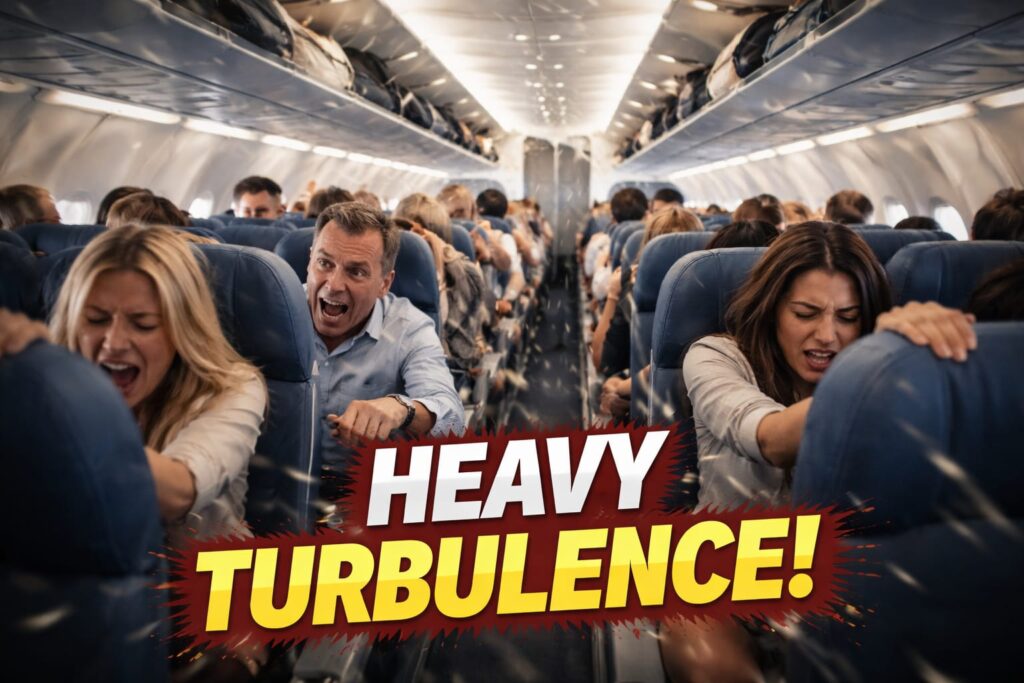
Severity Scale
Turbulence severity varies significantly.
Light Turbulence:
- Slight, erratic changes in altitude/direction
- Passengers seated feel strain on seat belt
- Small objects shift slightly
- Easily endured
Moderate Turbulence:
- Definite strain on seat belt
- Difficulty walking
- Objects fall or shift
- Uncomfortable but safe
Severe Turbulence:
- Passengers thrown around
- Difficulty controlling aircraft
- Loose items become projectiles
- Can cause injury if not seated
Extreme Turbulence:
- Extremely rare
- Structural damage possible
- Serious injury or worse
- Almost never encountered in modern aviation
Why Aircraft Can Fly Through Turbulence
Aircraft are designed to withstand extreme forces far exceeding turbulence.
Structural Strength:
- Built to survive forces far exceeding turbulence
- Stress-tested extensively
- Multiple redundant systems
- Safety factors of 1.5x (minimum design load)
What This Means:
If maximum turbulence can create 1G force, aircraft designed for 1.5G or more.
Turbulence rarely approaches aircraft design limits.
Pilot Response to Turbulence
Pilots manage turbulence through several procedures.
Avoidance:
- Pilots check weather forecasts
- Avoid known turbulence areas
- Climb or descend to smoother air
- Reroute around weather
Management:
- Reduce speed if turbulence encountered
- Warn cabin crew to prepare
- Adjust seatbelt sign
- Communicate with passengers
Safety:
- All procedures trained extensively
- Equipment monitored constantly
- Airspeed limits respected
- Safe margins maintained
Passenger Safety During Turbulence
Passengers have multiple layers of protection during turbulence.
Seat Belts:
- Essential protection
- Prevents injury from sudden movement
- Remain buckled throughout flight
- Tightened during turbulence
Cabin Crew:
- Trained extensively
- Secure loose items
- Assist injured if necessary
- Communicate with pilots
Safety Systems:
- Multiple systems functioning
- Redundant equipment
- Emergency procedures in place
- Trained crew prepared
The Statistics
Commercial aviation safety statistics are very reassuring.
Commercial Aviation Safety:
- Deaths from turbulence alone: ~100-200 annually worldwide
- Total commercial flights: 40,000+ daily
- Turbulence accident rate: Extremely low
Perspective:
- More people injured by car accidents in one week than turbulence injuries in one year
- Driving to airport is more dangerous than flight
- Turbulence injuries are extremely rare
Why Deaths Are So Low:
- Aircraft easily withstand turbulence
- Crew highly trained
- Emergency procedures effective
- Modern equipment reliable
Myths About Turbulence
Several common misconceptions about turbulence should be addressed.
Myth: “Turbulence can crash an aircraft”
Reality: No amount of turbulence can crash modern aircraft. Aircraft are designed to withstand far more than any possible turbulence.
Myth: “Severe turbulence means mechanical problem”
Reality: Severe turbulence is usually atmospheric (weather), not mechanical. Aircraft typically functioning normally.
Myth: “Pilots are worried during turbulence”
Reality: Pilots encounter turbulence routinely. It’s normal. They manage appropriately but aren’t concerned about safety.
Myth: “Turbulence is becoming worse”
Reality: Turbulence patterns haven’t significantly changed. More flights equals more reported turbulence but not more turbulence.
Myth: “Aircraft should avoid all turbulence”
Reality: Impossible to avoid all turbulence. Pilots manage it as part of normal operations.
How to Reduce Anxiety
Practical steps to manage flight anxiety related to turbulence.
Understand the Physics:
- Aircraft designed for forces exceeding turbulence
- Completely safe
- No accident risk from turbulence
Understand the Crew:
- Pilots train extensively
- Respond appropriately
- Not concerned about safety
- Managing routine situation
Understand the Statistics:
- Extremely safe
- Deaths rare
- Millions of flights safely
- Low injury rate
Accept It:
- Turbulence is normal
- Not a safety issue
- Temporary discomfort
- Flight will continue safely
Experiencing turbulence can be unsettling, but understanding aircraft design and safety procedures helps ease anxiety about flight. Commercial aircraft are engineered to withstand forces far exceeding any turbulence they’ll encounter, with multiple redundant safety systems protecting you throughout the flight. Pilots train extensively to manage turbulence as a routine part of operations, and they’re constantly monitoring weather to avoid severe conditions when possible. The combination of robust aircraft design and highly trained crews makes turbulence uncomfortable but completely safe.
Conclusion
Turbulence is an atmospheric phenomenon causing temporary aircraft movement.
While uncomfortable, it’s:
- Completely safe
- Easily managed by pilots
- Normal part of aviation
- Not a safety risk
Modern aircraft are incredibly strong. Turbulence cannot damage them.
Pilots are extensively trained. They manage it routinely.
Understanding these facts helps reduce anxiety and allow enjoyment of flight.
The next time you experience turbulence, remember: the aircraft is safe, pilots are in control, and you’ll land safely.