Pilot salaries vary dramatically. A regional airline first officer might earn $40K while a major airline captain earns $300K+.
Understanding what determines pilot compensation helps explain these vast differences.
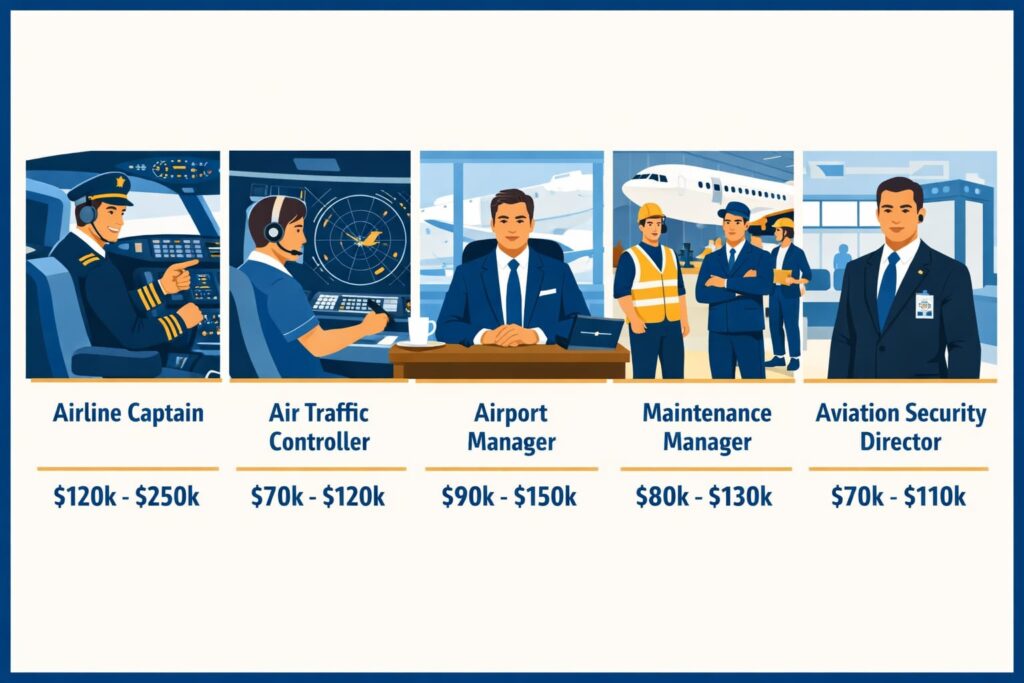
Factors Determining Pilot Salary
Multiple factors combine to determine what pilots earn.
Airline Size and Type
Different airline categories pay very differently.
Major Carriers:
- United, American, Delta, Southwest
- Higher pay scales
- Better benefits
- Captain salaries: $200K-$350K+
- First officer salaries: $150K-$250K
Large Regional Airlines:
- SkyWest, Republic, Horizon
- Moderate pay scales
- First officer salaries: $80K-$120K
- Captain salaries: $150K-$250K
Small Regional Airlines:
- Various small carriers
- Lower pay scales
- First officer salaries: $30K-$60K
- Captain salaries: $100K-$150K
International Carriers:
- Varies by country and airline
- Often higher than US salaries
- Different benefit structures
Aircraft Type
The aircraft you fly significantly affects compensation.
Wide-Body Aircraft:
- Boeing 777, 787, Airbus A350
- Larger, more complex
- Higher pay: Captain $250K-$350K+
- Limited seats available
- Premium compensation
Narrow-Body Aircraft:
- Boeing 737, Airbus A320, A321
- Smaller, simpler
- Standard pay: Captain $200K-$280K
- More seats available
- Standard compensation
Regional Aircraft:
- Bombardier CRJ, Embraer ERJ
- Smallest aircraft
- Lowest pay: Captain $100K-$150K
- Entry-level position
- Lower compensation
Why Different Pay?
- Wide-body requires more training
- More responsibility
- More complex systems
- Higher liability insurance
- More lucrative routes
Seniority
Seniority determines compensation more than almost any other factor.
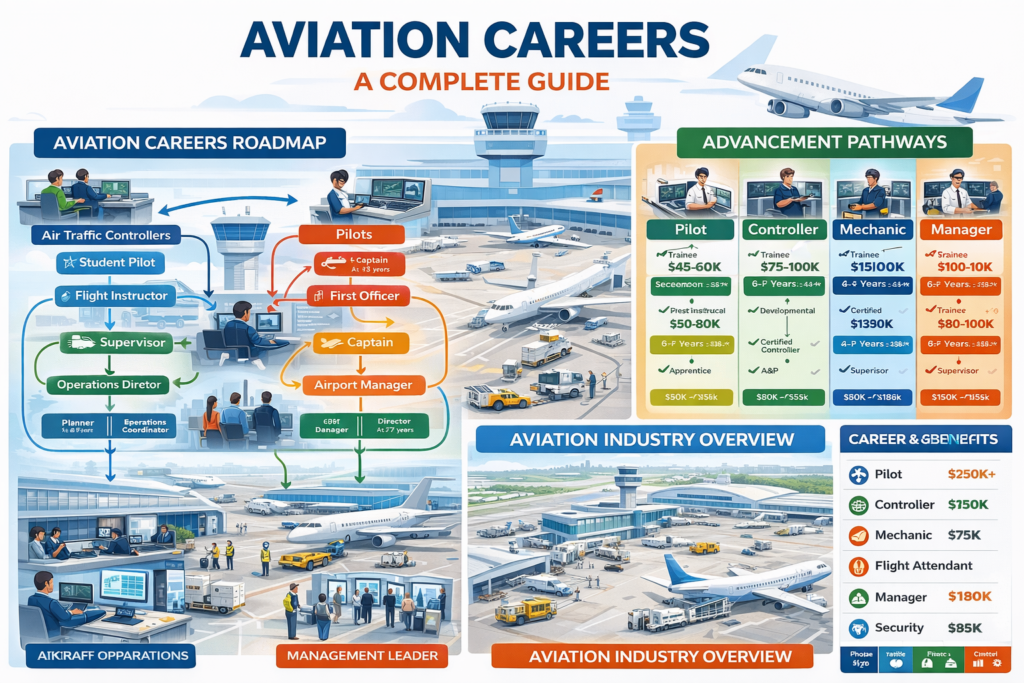
Seniority System:
Most airlines use strict seniority systems determining:
- Pay rate
- Route selection
- Schedule choice
- Equipment assignment
- Pilot advancement
Seniority Progression:
Year 1-5 (Regional Airline):
- New hire first officer
- Salary: $30K-$60K
- Hours: 60-70 per week
- No schedule control
- Bottom seniority
Year 6-10 (Major Airline First Officer):
- Upgraded to major airline
- Salary: $80K-$150K
- Hours: 70-80 per week
- Limited schedule choice
- Junior seniority at major airline
Year 11-15 (Major Airline Captain):
- Promoted to captain
- Salary: $150K-$250K
- Hours: 70-75 per week
- Better route selection
- Mid-seniority as captain
Year 15+ (Senior Captain):
- Highly senior position
- Salary: $200K-$300K+
- Hours: Can reduce to ~70 per month
- Premium routes
- Senior seniority
Time to Peak Salary:
15-20 years from starting training to earning top pilot salary.
Hours Flown
Flight hours directly impact compensation at most airlines.
Flight Hours Impact:
- More hours = higher pay (typically)
- International routes = more hours
- Long-haul routes = higher pay
- Short-haul routes = lower pay
Calculation:
Base salary + hourly premium for hours over minimum.
Example: Captain base $200K per year. Hourly rate $200/hour. 100 additional hours per year: +$20,000. Total: $220,000.
This incentivizes pilots to pick more flying.
Union Contracts
Most commercial pilots are union members.
Pilot Unions:
- Air Line Pilots Association (ALPA)
- Southwest Airlines Pilots Association
- Various regional airline unions
Union Impact:
- Negotiate salary scales
- Establish minimum pay
- Determine seniority systems
- Set benefits
- Protect pilot interests
Contracts:
- Multi-year agreements
- Annual pay increases
- Defined progression
- Protection from arbitrary changes
Union Strength:
Airlines cannot unilaterally cut pilot pay. Pilot unions are strong and well-organized.
Bonuses and Incentives
Beyond base salary, pilots receive various bonuses.
Sign-On Bonuses:
- New pilots to airline: $10K-$100K
- Retention bonus: $50K-$200K
- Signing bonus for upgrading to captain: $100K+
Flight Incentives:
- Holiday pay bonuses
- International trip bonuses
- Premium route bonuses
- Loyalty bonuses
Example:
Captain salary: $200K. Sign-on bonus: $50K. Promotion bonus: $75K. Total first year: $325K.
Benefits
Beyond salary, pilots receive valuable benefits.
Health Insurance:
- Comprehensive coverage
- Dental and vision
- Mental health coverage
- Family coverage
Retirement:
- 401K matching
- Pension plans (older pilots)
- Defined benefit retirement
- Can retire at 55-60 with good pension
Travel Benefits:
- Free flights for pilot + family
- Priority upgrades
- Buddy passes
- Standby travel
Other Benefits:
- Stock options (some airlines)
- Educational benefits
- Life insurance
- Disability coverage
Total Compensation:
Benefits can add $50K-$100K+ to salary annually.
Regional Airline VS. Major Airline
The difference between regional and major airline compensation is dramatic.
Regional Airline First Officer:
- Salary: $40K-$60K
- Hours: 70-80 per week
- No seniority
- Lower benefits
- Starting position
Regional Airline Captain:
- Salary: $100K-$150K
- Hours: 70-80 per week
- High seniority at regional
- Low seniority at major
- Stepping stone to major airline
Major Airline First Officer:
- Salary: $80K-$150K
- Hours: 70-80 per week
- Junior seniority
- Better benefits
- Path to captain
Major Airline Captain:
- Salary: $200K-$350K
- Hours: Can reduce to 70/month
- High seniority
- Excellent benefits
- Goal for most pilots
The Path to Top Salary
Timeline to Peak Compensation:
Age 25: Start Flight Training
- Cost: $150K-$200K
- Income: $0
- Debt: High
Age 27: Regional Airline First Officer
- Salary: $40K-$60K
- Hours: High
- Debt: Paying down
- Timeline: 5-8 years in this position
Age 32-35: Major Airline First Officer
- Salary: $100K-$150K
- Hours: 70-80 weekly
- Debt: Mostly paid
- Timeline: 10+ years in this position
Age 45-50: Major Airline Captain
- Salary: $200K-$300K
- Hours: Can reduce
- Debt: Paid
- Timeline: 15-20 years to reach
The Reality:
Most pilots don’t earn $200K+ until mid-career (age 45+).
Early career pay is modest relative to training costs.
Current Salary Levels (2026)
Salary levels have increased significantly in recent years.
Regional Airline:
- First Officer: $50K-$80K
- Captain: $130K-$180K
- Significant increases from 2020 (pilot shortage)
Major Airline:
- First Officer: $100K-$180K
- Captain: $220K-$350K
- Highest paid in aviation
Southwest Airlines (highest pay):
- Captain: $250K-$350K+
- Top pilot salary in industry
Factors in High 2026 Pay:
- Pilot shortage (airlines competing for pilots)
- Union negotiations
- Industry growth
- Experience pilot demand
Taxes and Take-Home Pay
High earner reality: Captain earning $300K doesn’t take home $300K.
Tax Calculation:
- Federal income tax: ~35-37%
- State income tax: ~5% (varies)
- Social Security/Medicare: ~7.65%
- Union dues: ~1-2%
Effective Tax Rate:
Approximately 50%
Take-Home Example:
$300K salary. $150K (50%) = taxes and expenses. $150K = take-home pay.
While $300K sounds impressive, taxes reduce it substantially.
Career Earnings
Total career earnings (Major Airline Captain):
Earnings Breakdown:
- Age 27-35 (Regional + Major FO): 8 years × $80K average = $640K
- Age 35-50 (Captain): 15 years × $200K average = $3,000K
- Total Earnings: ~$3,600K before taxes
After Taxes (~50%):
~$1,800K net
Career Cost:
Training $150K-$200K
Net Career Earnings:
~$1,600K+ over 23 years
Reasonable career earnings but not exceptional for the career length and training cost.
Future Trends
Several trends will affect pilot compensation.
Pilot Shortage:
- Retirement of baby boomer pilots
- New training requirements
- High demand for pilots
- Expected salary increases
Automation Impact:
- Future aircraft may need fewer pilots
- Long-term salary pressure
- Uncertain automation timeline
- Current shortage likely to continue 10+ years
Conclusion
Pilot salaries are determined by multiple factors working together:
- Airline size
- Aircraft type
- Seniority
- Union contracts
- Experience
- Hours flown
Top pilots at major airlines earn impressive salaries ($250K-$350K+), but it takes 15-20 years to reach that level.
The path to $300K pilot salary is long, expensive, and requires years of dedication.
Understanding compensation helps explain why pilot shortages occur and why pilot pay keeps increasing.
Aviation careers span a wide range of opportunities beyond the well-known pilot position, from ground handling to air traffic control to airport management. Each career path offers different compensation, work-life balance, and advancement opportunities suited to different personalities and preferences. If you’re considering an aviation career, exploring the full range of options helps you find a role that truly fits your interests and goals. Whether you want rapid advancement, stable income, or hands-on technical work, aviation has a career path for you.